

Determining how often you should schedule pest control is the foundation of a healthy, secure home environment. In the volatile climate of South-East Melbourne, pest activity doesn’t follow a strict “on-off” switch; it shifts with the seasons, requiring a consistent defensive strategy. Recognizing the right frequency for professional intervention prevents minor sightings from escalating into structural or health crises. This comprehensive guide covers ideal scheduling patterns, environmental risk factors, immediate warning signs, and professional maintenance cycles. Understanding these timelines helps you maintain a pest-free sanctuary throughout Hallam, Clayton, and the surrounding suburbs.
Understanding Ideal Pest Control Frequency in Melbourne
Melbourne’s unique weather patterns—characterized by sudden temperature shifts and high humidity—create a breeding ground for resilient species. You cannot treat a property once and expect permanent results. Effective pest management requires a rhythm that disrupts the life cycles of various insects and rodents. Most residential properties in the South-East find that a quarterly approach offers the most reliable protection.
Health and safety represent the primary drivers for a consistent schedule. Pests like cockroaches and rodents carry pathogens that contaminate surfaces and trigger respiratory issues. In areas like Dandenong or Berwick, where older structures and newer developments coexist, the risk of cross-contamination from neighboring properties is high. If you wait too long to schedule pest control, you allow hidden colonies to reach a size where they can cause genuine physical harm to your family.
Structural integrity is the second major concern. Termites and wood-boring beetles work silently, often for months, before any visible damage appears. A regular service schedule ensures that these “silent destroyers” are caught during routine inspections, preventing thousands of dollars in restoration costs.
Seasonal Triggers and Timing Indicators
Different pests become active at different times of the year, meaning your service schedule must align with biological patterns. A well-timed treatment hits pests right as they begin their breeding or migration cycles.
Symptoms that your current schedule is insufficient include:
- Increased sightings of spiders or ants as the weather warms up in Spring
- Strange noises in the roof or wall cavities during late Autumn
- Visible droppings appear shortly after a heavy rain event
- Hollow-sounding timber discovered during spring cleaning
- Musty odors in the pantry that persist despite deep cleaning
- Bite marks or itchy welts appearing during the humid Summer months
- Dead insects are found frequently near entry points or windowsills
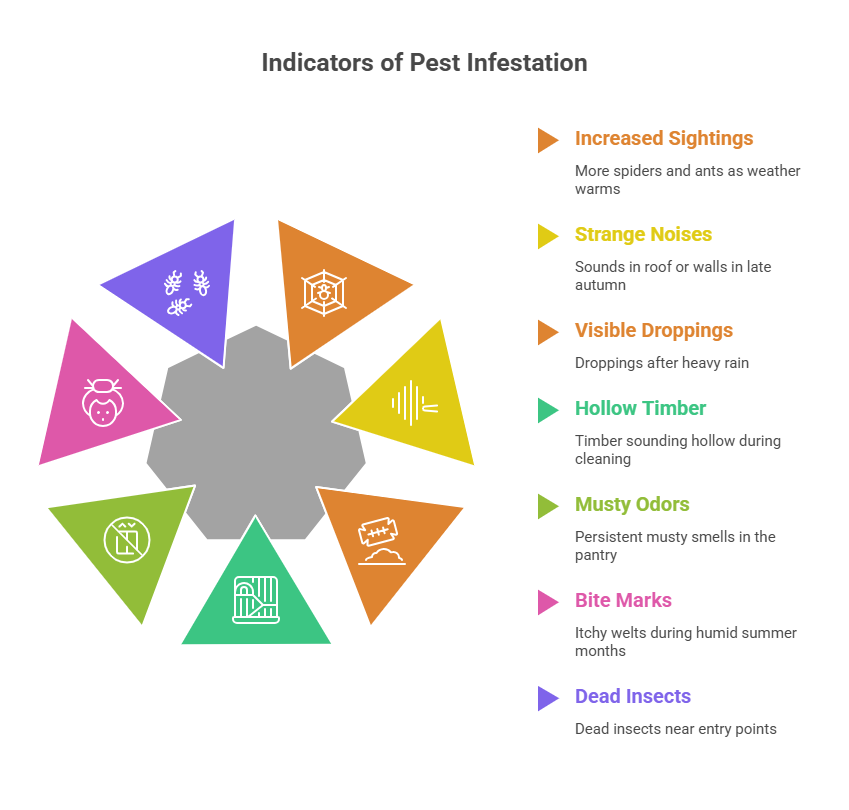
These indicators suggest that your home’s protective barrier has degraded. In South-East Melbourne, the high UV index can break down external chemical barriers faster than in other regions. Regularly checking these signs helps you decide when to schedule pest control outside of your standard window. Advanced activity usually requires a “knockdown” treatment followed by a shortened maintenance cycle to regain control.
| Schedule Type | Property Profile | Risk Level | Typical Solution |
| Quarterly | Standard Family Homes | Low-Moderate | Seasonal barriers & inspections |
| Bi-Monthly | Properties near Bush/Water | Moderate-High | Frequent monitoring & baiting |
| Monthly | Commercial/Restaurants | Very High | Intensive sanitation & control |
| Bi-Annual | New Builds (Modern) | Very Low | Perimeter checks & minor sprays |
| Emergency | Active Infestations | Extreme | Immediate eradication & follow-up |
Environmental Pressures and Property Age
Your specific location in the Southeast determines how often you should schedule pest control. Homes near the Royal Botanic Gardens, Cranbourne or the various parklands in Rowville face higher pressure from wildlife and “bridge” pests that travel along overhanging branches. Older homes with timber foundations require much more frequent monitoring than modern slab-on-ground constructions.
The surrounding environment acts as a constant reservoir for pests. If a neighbor is renovating or if there is local construction, pests are often displaced and seek refuge in the nearest stable environment—your home. This “spillover” effect means that even the cleanest house can be invaded overnight. Maintaining a proactive schedule ensures your home is the least attractive option for these displaced intruders.
Detecting Hidden Failures Through Professional Audits
Professional eyes see what homeowners miss. While you might only see a few ants on a counter, an expert technician looks for the moisture source behind the wall that is sustaining the colony. Scheduling regular audits allows for the use of specialized technology, such as thermal imaging and moisture sensors, to track pest movement.
At Pest Soldiers, our scheduled visits are more than just “spraying and leaving.” We conduct a full property audit to ensure your prevention habits are working. We check the “dead zones”—sub-floors, roof voids, and behind heavy appliances—where 90% of pest activity actually occurs.
Scheduled Audit Checklist Includes:
- Scanning for thermal signatures of hidden termite nests
- Checking moisture levels in wet areas like laundry and bathrooms
- Evaluating the integrity of existing chemical barriers
- Inspecting “weep holes” and external vents for blockages or breaches
- Monitoring rodent bait stations for signs of new activity
- Assessing the effectiveness of previous treatments
- Providing updated proofing recommendations for the upcoming season
Immediate Actions Between Scheduled Visits
Even with a perfect plan, nature can be unpredictable. Knowing how to handle a “breakthrough” infestation between your regular visits is key to maintaining long-term control.
Safe Responses to New Activity:
- Note the location: Mark exactly where you saw the pest to help your technician.
- Clean the trail: Use a vinegar solution to disrupt ant pheromone trails.
- Remove the lure: If a specific food or water source drew them in, eliminate it.
- Don’t overspray: Using too many DIY chemicals can make a professional’s job harder by scattering the colony.
- Call for a ‘Spot Treatment’: Most reputable companies offer bridge services between main visits.
- Check the exterior: See if a recent storm has knocked down a branch or created a new puddle near the foundation.
Never wait until your next appointment if you see signs of termites or bed bugs. These specific pests require immediate intervention to prevent rapid escalation.
Professional Scheduling Solutions and Protection Plans
A professional approach to timing involves a “Year-Round Protection Plan.” This isn’t just a recurring bill; it’s a strategic defense that changes its focus based on the calendar. At Pest Soldiers, we adapt our treatments to the specific biological threats present at the time of our visit.
Common Professional Scheduling Strategies:
- Spring Focus: Destroying nests and webs before the summer breeding explosion.
- Summer Focus: Internal and external barriers for cockroaches, ants, and flies.
- Autumn Focus: Rodent exclusion and sealing entry points before the cold hits.
- Winter Focus: Attic and sub-floor checks for termites and nesting rodents.
- Post-Storm Audits: Checking for breaches after Melbourne’s notorious wild weather.
- Integrated Monitoring: Using non-toxic sensors to track activity 24/7.
Prevention is significantly more cost-effective than reactive “firefighting.” When you schedule pest control regularly, we can use lower-toxicity, more targeted methods because we are managing a small population rather than battling a massive infestation.
Frequently Asked Questions About Scheduling Pest Control
How often should I schedule pest control for a standard home in Hallam?
For most residential properties in the Hallam and Clayton areas, quarterly (every 3 months) is the gold standard. This allows us to refresh barriers and address seasonal pests as they emerge.
Is annual pest control enough?
While an annual inspection is the absolute minimum (especially for termites), it usually isn’t enough to stop common pests like ants and cockroaches, which have much faster breeding cycles. Annual treatments often leave the home unprotected for 6-9 months of the year.
What if I don’t see any pests—can I skip a scheduled visit?
Seeing no pests is a sign that the treatment is working! Skipping a visit allows the protective barrier to break down, giving pests a “window of opportunity” to re-establish themselves. Consistency is the key to a pest-free home.
Does the weather affect when I should schedule pest control?
Absolutely. We often recommend a visit right at the start of Spring and again in late Autumn. These are the two biggest “transition periods” for Melbourne pests when they are most likely to move into your home.
How long does a scheduled treatment last?
Most professional-grade external barriers are designed to last between 60 and 90 days, depending on sun exposure and rainfall. This is why a quarterly schedule is so effective—it ensures the barrier never fully disappears.
Don’t Leave Your Home’s Safety to Chance
Pests are a year-round threat in Melbourne, and their activity won’t wait for a convenient time. Pest Soldiers offers expert advice and reliable service to help you schedule pest control that fits your property’s unique needs. Our local technicians understand the specific pressures of the South-East suburbs and provide tailored solutions that protect your investment.
From emergency call-outs to comprehensive annual protection plans, we deliver the expertise required to keep your home safe, clean, and comfortable. Don’t wait for the first sign of a problem to seek help.