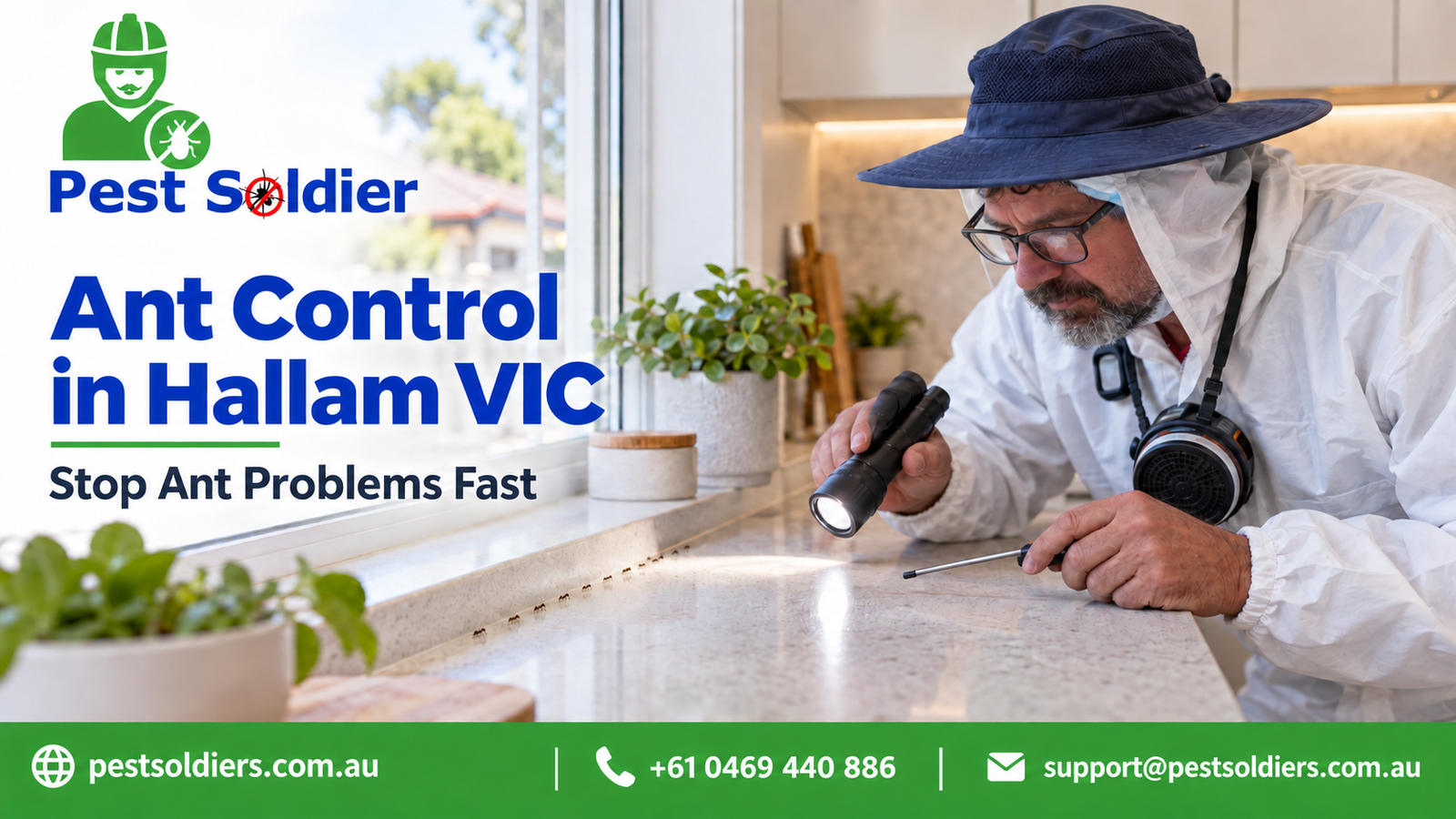
Finding a few ants on a kitchen bench may not seem serious. Within hours, however, a thin trail can become a steady stream moving between a crack, a food source and a hidden nest. If you live or manage a property in Hallam, the best response is not simply to kill the ants you can see. Effective control starts with understanding why they are entering, where they are travelling and what treatment is most suitable for the species and nesting location.
The short answer is this: remove accessible food and water, follow the trail to identify likely entry points, seal gaps where practical and use a correctly labelled ant bait or treatment suited to the problem. If ants keep returning, appear in several rooms or nest in a sensitive area, professional ant control in Hallam VIC may be the more effective next step.
This guide explains why ants invade homes, how to inspect your property, which prevention steps make the biggest difference and when to contact a pest control professional.
Why Are Ants Coming Into Your Hallam Home?
Ants are social insects that live in organised colonies. Worker ants leave the nest to search for food and water. When a worker finds a useful source, it can leave a chemical trail that helps other workers follow the same route. That is why one or two ants can soon become a visible line across a wall, floor, window frame or benchtop.
A house can provide almost everything a colony needs:
- Crumbs, sugar, grease and food residue
- Pet food left in bowls
- Unsealed pantry products
- Water around sinks, taps, showers or leaking pipes
- Shelter inside wall voids, roof spaces, paving gaps or garden edges
- Small openings around doors, windows, pipes and utility lines
Ant activity does not automatically mean that a home is dirty. Even a well-kept property can have attractive moisture, garden conditions or structural gaps. The practical goal is to identify and reduce the exact resources and routes supporting the activity.
Weather can also change ant behaviour. For example, some outdoor-nesting ants may move indoors during wet conditions. Warm periods may increase foraging activity and make trails more noticeable. A treatment that only removes visible workers may therefore provide short-term relief without dealing with the nest or the conditions attracting the colony.
Are All Ants the Same?
No. Australia has thousands of known ant species, although only a relatively small number regularly become pests in and around buildings. Different species may prefer different foods, establish different types of nests and respond differently to baits, sprays or other control methods.
The Victorian guidance on ant pest control lists several major pest species, including Argentine ants, Singapore ants and white-footed house ants.
Argentine ants may form interconnected nests with multiple queens and often travel in well-defined trails. White-footed house ants, sometimes called black ants in Victoria, can establish numerous nesting sites. Singapore ants may nest around electrical equipment, making careless DIY treatment especially inappropriate in those locations.
Correct identification matters because a sweet bait that attracts one species may not be the best option for another species seeking protein or oily food. Nest location matters as well. Ants emerging from a garden edge require a different inspection approach from ants appearing around a power point, roof void or inaccessible wall cavity.
Do not rely on colour alone for identification. Size, body shape, trail behaviour, food preference and nesting area all provide useful clues. If unsure, photograph the ants, note where they appear and arrange an assessment instead of repeatedly applying random products.
Common Signs of an Ant Infestation
An occasional outdoor ant may not require treatment. Ants become a practical pest problem when they repeatedly enter a building, reach household food or establish activity that affects hygiene, comfort or equipment.
Look for these common warning signs:
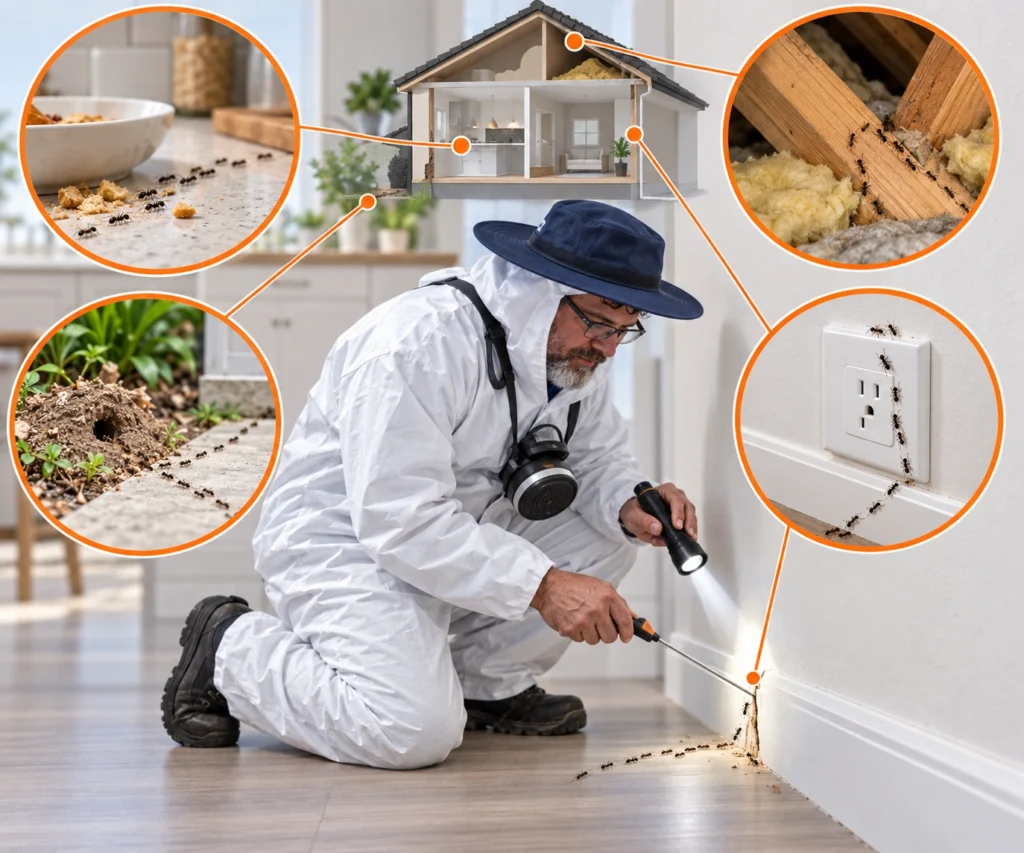
- Repeated trails along skirting boards, benches, walls or window frames
- Ants appearing around food preparation or pantry areas
- Activity near pet bowls, bins, compost or recycling
- Ants entering through cracks around doors, windows, pipes or foundations
- Soil, fine debris or nesting material emerging from gaps
- Winged ants appearing indoors at certain times
- Ants returning soon after visible workers are sprayed or wiped away
- Activity in several rooms or on more than one level
- Ants around electrical fittings, appliances or irrigation equipment
Follow the entire trail instead of focusing only on its busiest point. Watch where ants enter, feed and continue outside. This helps distinguish a local indoor issue from a larger exterior colony.
How to Inspect Your Home Before Treating Ants
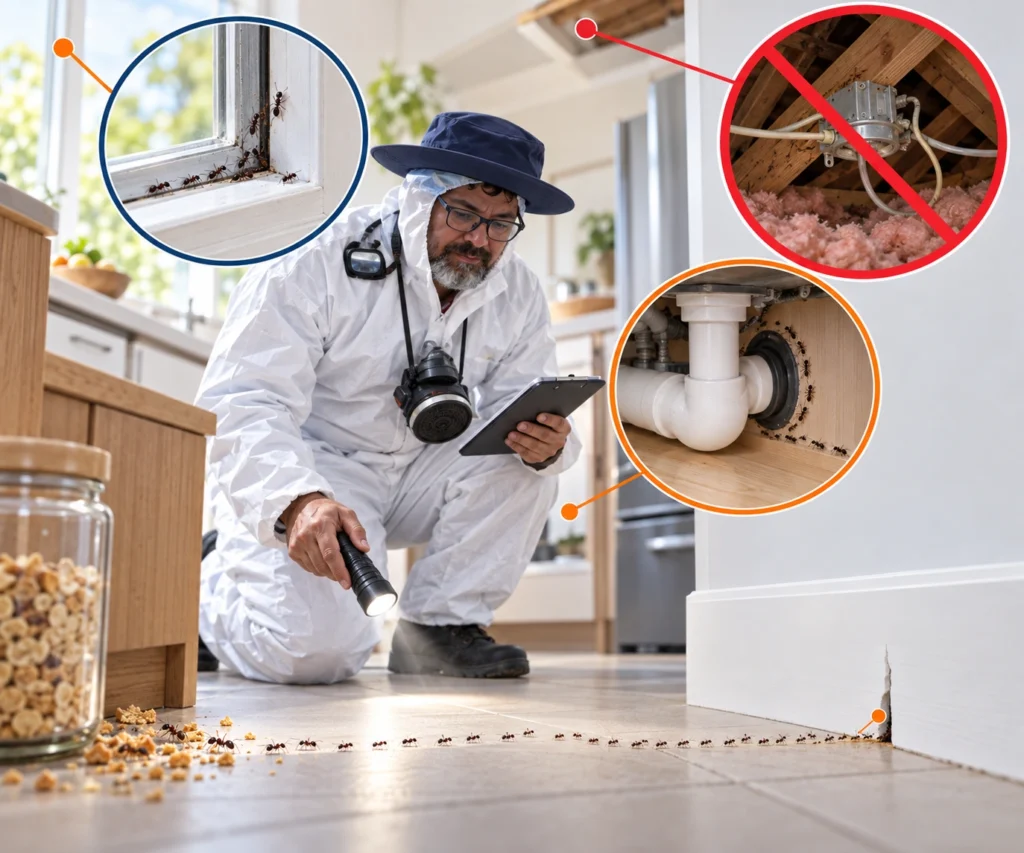
Before cleaning away every trail, observe it long enough to understand the route. Do not touch exposed wiring, dismantle electrical fittings or enter unsafe roof spaces. A basic, non-invasive inspection can still reveal a great deal.
1. Start at the Food or Water Source
Check benches, cupboards, pantry shelves, sinks, bins and pet-feeding areas. Look for spills, sticky residue, crumbs, overripe fruit, open packaging and condensation.
Ants may be feeding on something that is easy to miss, such as residue beneath a toaster, microwave or other kitchen appliance.
2. Follow the Trail Backwards
Observe the direction from which worker ants are arriving. Inspect skirting gaps, window tracks, door frames, pipe penetrations and cracks.
Outside the property, examine:
- Foundation lines
- Paving edges
- Outdoor taps
- Rubbish-bin areas
- Tree bases
- Garden beds
- Vegetation touching the building
3. Note When and Where Activity Occurs
Record whether ants are most active by day or night, after rain, near a particular room or around a specific food. Photos and short notes can help if activity changes before an inspection.
4. Check for Contributing Property Conditions
Look for leaking taps, damp cabinets, unsealed food, overflowing bins, fallen fruit, dense vegetation against exterior walls, mulch piled against the building and visible cracks.
Reducing these conditions is an important part of long-term ant prevention.
A Step-by-Step Plan to Get Rid of Ants
Step 1: Remove Food Sources
Clean benches, floors, splashbacks and spaces beneath small appliances. Store sugar, cereal, baked goods and pet food in sealed containers. Empty rubbish regularly and keep bin lids closed.
Avoid leaving pet food out for long periods. Clean the floor around the bowl as well as the bowl itself. Check outdoor feeding and barbeque areas for grease, drink spills and scraps.
Good hygiene may not destroy an established nest, but it removes competing food sources and makes properly selected baits more attractive. It also reduces the chance that another trail will form after treatment.
Step 2: Reduce Accessible Moisture
Repair leaking taps and pipes where possible. Wipe standing water around sinks and showers, check damp cabinets and avoid leaving unnecessary water in problem areas overnight.
Outside, inspect:
- Dripping garden taps
- Irrigation leaks
- Blocked drainage
- Damp areas beside the building
- Water collecting in containers
- Leaking air-conditioning outlets
Water reduction is particularly important when ants repeatedly appear in bathrooms, laundries or beneath kitchen sinks.
Step 3: Clean Ant Trails
After identifying the route, clean hard surfaces to remove food residue and help disrupt the ants’ chemical trail. Ordinary household cleaning appropriate for the surface is usually sufficient.
Cleaning alone will not eliminate the colony. However, it can reduce immediate trail-following while other control and exclusion measures are implemented.
Step 4: Seal Practical Entry Points
Seal small, non-essential gaps around window frames, door frames, skirting and pipe penetrations with a suitable material. Repair damaged screens and weather seals.
Trim branches or dense plants that touch the building and may provide a bridge to windows, eaves or rooflines.
Do not seal active ants inside a wall or equipment cavity without understanding the nest location. Ants may simply find another route, and activity could become harder to track. Exclusion works best after inspection and in combination with control of the colony or exterior source.
Step 5: Choose DIY Products Carefully
If using a household ant product, confirm that its label permits the intended use and location. Follow every direction, use only the stated amount and keep products away from:
- Children
- Pets
- Food and utensils
- Fish tanks and ponds
- Native animals
- Frequently touched surfaces
Never mix pesticides or transfer them into food or drink containers. Using more product does not necessarily produce better results. Incorrect placement can reduce effectiveness and increase unnecessary exposure.
Ant baits can help when the nest is inaccessible. Workers carry attractive bait back to the colony, so results may be slower than a spray. The bait must also match the target ant’s feeding preference.
Avoid spraying directly on or near bait unless the label or a qualified professional directs otherwise. Killing foraging workers too quickly can interfere with bait transfer.
Surface sprays may suit permitted travel routes, entry points or nesting areas, but space sprays generally do not solve a hidden colony alone. Dusts suit only particular situations. Leave electrical fittings, roof voids and other sensitive areas to a suitably qualified professional.
Step 6: Monitor the Result
Do not assume the infestation is gone because activity drops for one day. Continue monitoring the original trail, likely entry points and nearby rooms.
Some baiting programs require patience, fresh bait or follow-up treatment. Persistent or spreading activity may indicate that the main nest, a satellite nest or an exterior source has not been adequately addressed.
Ant Bait or Ant Spray: Which Is Better?
Neither option is universally better. The right choice depends on species, nest location, infestation size, environment and safety needs.
For a more focused comparison, read Pest Soldiers’ guide to DIY ant control versus professional ant treatment.
Ant Baits
Baits may be useful when workers can carry the active ingredient back to a hidden nest. They are often slower, and their success depends on:
- Correct placement
- Continued feeding
- Bait freshness
- Species preference
- Availability of competing food
Surface Sprays
Surface sprays may help treat permitted travel routes, entry points or accessible nesting locations. However, spraying only the workers walking across a bench may remove the visible ants without reaching the colony.
Ant Dusts
Dusts may be useful in certain dry voids or nesting areas, but airborne dust and unsuitable placement can create exposure risks. They should be applied lightly and only as directed.
Effective control may combine sanitation, moisture management, exclusion and a targeted product. Randomly alternating products can disrupt behaviour and make results harder to assess.
DIY Ant-Control Mistakes to Avoid
Treating Only the Ants You Can See
Visible worker ants are only part of the colony. If the queens, brood and nesting sites remain active, new workers can continue foraging.
Using Several Chemicals Together
Pesticides should never be mixed. Chemical combinations can be dangerous, and competing products may make baiting less effective.
Placing Bait Where Children or Pets Can Reach It
Even a retail household product requires careful storage and placement. Follow the label directions and use protected or tamper-resistant placement where appropriate.
Spraying Around Food and Frequently Touched Surfaces
Food, utensils and personal items should be removed or protected as directed. Avoid casual application to furniture, benches or other surfaces frequently touched by family members.
Ignoring Outdoor Attractants
Indoor spraying will not correct overflowing bins, dripping taps, fallen fruit, honeydew-producing garden pests or active nests beside the foundation.
Sealing Gaps Too Early
Blocking one active route before understanding the nest can cause ants to use a different opening. Inspect and plan before sealing the entry point.
Expecting Instant Colony Elimination
Baits can take time because workers must collect and distribute the product. Severe or widespread infestations may need follow-up assessment and treatment.
How to Prevent Ants From Returning
Long-term prevention is a routine, not a single spray. Use the following checklist:
- Wipe food and drink spills promptly
- Vacuum or sweep crumbs from dining and kitchen areas
- Keep pantry products and pet food in sealed containers
- Clean beneath appliances and shelving
- Keep indoor and outdoor bins closed and clean
- Remove fallen fruit and food waste from the garden
- Repair plumbing and irrigation leaks
- Reduce persistently damp areas around the structure
- Trim vegetation away from walls, windows and roof edges
- Avoid piling mulch, timber or stored materials against the building
- Repair door seals, screens and obvious cracks
- Inspect new ant activity before it becomes widespread
For a business, prevention should include documented cleaning, waste handling, stock rotation and routine inspection. Food premises, warehouses and offices have different risks, so each plan should be site-specific.
When Should You Call a Professional Ant Controller?
Consider arranging professional ant control in Hallam VIC when:
- Ants return after repeated cleaning and correctly used DIY treatment
- The trail leads into a wall, roof void or inaccessible cavity
- Activity appears around electrical equipment or power points
- Ants are found in multiple rooms or separate parts of the property
- You cannot confidently identify the ant species
- You cannot determine which treatment is suitable
- Children or pets make safe product placement difficult
- The infestation affects a commercial kitchen or workplace
- The problem occurs in a rental or managed property
- You see biting or stinging ants and are unsure of the risk
- Neighbouring or outdoor colonies appear to be causing reinfestation
A professional inspection should look beyond the visible trail. The technician may assess species, nesting areas, entry points, moisture, food sources and exterior activity before recommending treatment. Consumers in Victoria should use a licensed pest control operator.
What to Expect From Professional Ant Control
The process depends on the property and infestation, but a thorough service commonly involves:
- Initial discussion: Identifying where and when ants have been seen, which DIY products have been used and whether there are any safety concerns.
- Property inspection: Following trails, checking food and moisture sources, reviewing likely entry points and assessing indoor and outdoor nesting areas.
- Ant identification: Narrowing down the species or behaviour group so the treatment matches its feeding and nesting habits.
- Treatment planning: Selecting suitable bait, spray, dust or direct nest treatment where permitted.
- Safety instructions: Explaining preparation, access restrictions, cleaning requirements and precautions for occupants and pets.
- Prevention advice: Recommending sanitation, repairs, moisture control, vegetation management or sealing work.
- Monitoring or follow-up: Checking whether activity has reduced and determining whether further treatment is needed.
Before booking, mention babies, pregnant occupants, health sensitivities, pets, aquariums or edible gardens. Also disclose every product already applied so the provider can give appropriate instructions.
Ant Control for Hallam Homes, Rentals and Businesses
Ant problems occur in homes, units, rentals, offices, warehouses, retail sites and food-handling environments. The same principles apply—inspection, identification, removal of attractants, targeted treatment and prevention—but priorities differ by site.
Homeowners may need help with recurring kitchen trails, outdoor nests or activity around paving and foundations.
Tenants should report building defects such as leaks or structural gaps to their property manager and avoid applying unapproved pesticides. Landlords and property managers benefit from maintaining clear records of reports, inspections, repairs and treatments.
Commercial properties require extra attention to hygiene, stock storage, waste zones, delivery areas and business continuity. Pest Soldiers provides commercial pest control in Hallam for offices, warehouses, restaurants and other workplaces needing a site-specific pest-management plan.
Frequently Asked Questions About Ants in Hallam
Why do ants keep coming back after I spray them?
A spray may kill exposed workers without reaching the queen, brood or hidden nest. Other workers can then resume the trail or find a new route. The source must be identified, attractants reduced and the treatment matched to the species and nest location.
How long does ant bait take to work?
Ant bait is intentionally not always instant. Workers need time to collect it and distribute it throughout the colony.
The timeframe varies depending on the ant species, colony size, bait attractiveness, placement and competing food. Follow the label and avoid unnecessarily disturbing an active feeding trail.
Is ant treatment safe for children and pets?
Safety depends on the product, formulation, placement and correct use. Keep baits and pesticides inaccessible to children, pets and native animals and follow all label directions.
Tell the pest controller about children, pets, fish tanks and other sensitivities before treatment.
Should I seal the crack where ants are entering?
Sealing can help prevent future entry, but first identify the trail and likely nest. If you block an active route too early, ants may emerge somewhere else. Colony control and practical exclusion usually work better together.
Are ants a sign that my house is dirty?
Not necessarily. Food residue can contribute to ant activity, but ants may also enter a clean property searching for water, shelter or a suitable nesting area. Leaks, garden conditions and small structural openings can all play a role.
Can ants damage timber like termites?
Ants and termites are different insects. Victorian health guidance notes that ants cannot damage sound timber in the same way termites do.
However, unexplained insect activity, winged insects or damaged timber should be professionally identified rather than diagnosed from appearance alone.
Do I need professional ant control for only a few ants?
Not always. Start by inspecting the trail, cleaning food residue, removing water sources and sealing appropriate gaps.
Seek professional help if the activity persists, spreads, involves a sensitive location or cannot be safely identified and treated.
What information should I provide when booking ant control?
Explain where the ants appear, when the activity started, whether it changes with weather or time of day and which DIY products have already been used.
Mention children, pets, aquariums, health sensitivities, edible gardens and property-access concerns.
Get Help With Ant Control in Hallam VIC
Recurring ants usually indicate more than a few wandering insects. A successful plan connects the visible trail to its food source, entry route and nesting area, then combines suitable treatment with practical prevention.
If ants continue returning, explore Pest Soldiers’ local pest control services in Hallam and contact the team to arrange an assessment.
Share where the ants appear, how long the problem has been present and any treatment already used.
Pest Soldiers
Phone: 0469 440 886
Email: support@pestsoldiers.com.au