
Pests invade homes silently, exploiting the smallest vulnerabilities in your property’s defenses. When these intruders establish a foothold, they create significant health risks, structural damage, and persistent hygiene issues. Recognizing how to prevent pests in the home early stops colonies from multiplying and saves you from the high costs of emergency extermination. This comprehensive guide covers common prevention methods, early detection strategies, immediate safety responses, and professional maintenance solutions. Understanding these proactive steps helps you safeguard your property and family throughout the South-East Melbourne region.
Understanding Why Pests Target Your Living Space
Every household in suburbs like Hallam and Clayton faces pressure from pests seeking three core resources: food, water, and shelter. Problems develop gradually—a dripping tap attracts cockroaches, unsealed pantry items invite ants, and cluttered roof voids provide perfect nesting for rodents. Most home infestations remain hidden behind walls and under floors until the population becomes unmanageable.
Contamination is the most immediate risk when you fail to prevent pests in the home. Rodents and insects carry bacteria that lead to salmonella and exacerbated asthma symptoms. This risk is highest in kitchens and dining areas where food preparation occurs. If you notice small droppings or unusual smells, it indicates that your current prevention methods have been breached, requiring a professional assessment.
Environmental factors in Melbourne also play a role. Seasonal shifts drive pests indoors; hot summers force them inside for water, while wet winters push them toward the warmth of your home. Without a solid prevention plan, your property becomes an easy target for these seasonal migrations.
Visual Signs and Breach Indicators
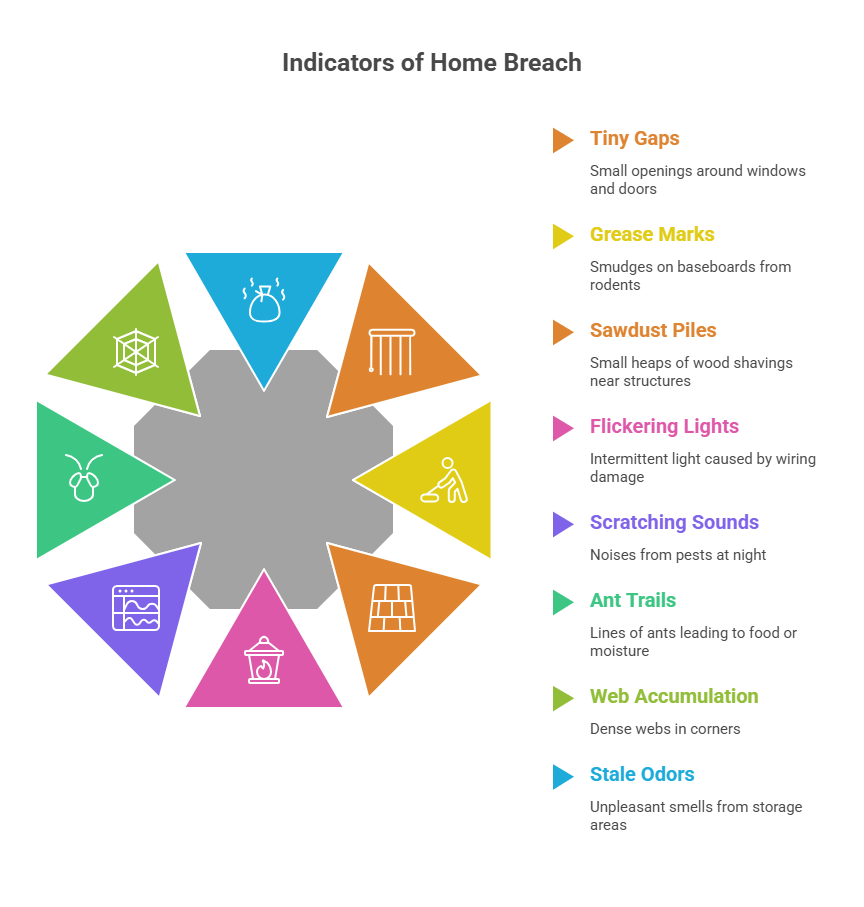
Identifying a breach in your home’s defenses is crucial for effective prevention. Pests leave behind specific evidence that signals your current exclusion methods are failing.
Symptoms indicating a need for better prevention include:
- Tiny gaps around window frames or door thresholds
- Grease marks on baseboards where rodents have squeezed through
- Small piles of sawdust or dirt near wooden structures
- Flickering lights caused by pests gnawing on internal wiring
- Unusual scratching or scurrying sounds during quiet night hours
- Visible trails of ants leading toward moisture or food sources
- Web accumulation in corners, indicating a high volume of prey insects
- Stale odors emanating from cupboards or pantry areas
Inadequate sealing is the primary cause of these breaches. In South-East Melbourne, shifts in soil can create new cracks in foundations that pests exploit. Regular prevent pests in the home audits catch these vulnerabilities early when simple caulking or door sweeps suffice. Advanced breaches may require professional structural sealing or chemical barriers.
| Prevention Type | Detection Method | Danger Level | Typical Solution |
| Entry Sealing | Visual cracks, light under doors | High | Caulk, mesh, and door sweeps |
| Food Storage | Chewed packets, crumbs | Medium | Airtight glass/plastic bins |
| Water Removal | Leaky pipes, damp spots | Medium-High | Plumbing repairs & drainage |
| Garden Care | Overgrowth touching walls | Low-Medium | Trimming & debris removal |
| Waste Management | Overflowing bins, odors | High | Sealed bins & frequent removal |
The Risk of Poor Sanitation and Clutter
Modern homes often accumulate clutter that serves as a primary attractant for pests. Even a clean home can harbor hidden risks if storage areas are neglected. Piles of cardboard, old newspapers, and unused fabrics provide ideal nesting materials for rodents and spiders.
Inadequate waste management significantly undermines efforts to prevent pests in the home. Uncovered bins or food scraps left in drains act as a 24/7 buffet for cockroaches and flies. Many homeowners rely on surface cleaning but forget the “dead zones” behind heavy appliances. These areas collect organic matter that can sustain a pest colony for months. Addressing these hidden spots is essential to breaking the cycle of infestation.
Detecting Failures Early Through Regular Inspections
Catching a failure in your prevention strategy early is the best way to avoid catastrophic damage. Regular inspections allow you to identify developing issues while they are still minor. Waiting until you see a pest during the day usually means a large colony is already established nearby.
Professional inspections provide a deeper level of security. At Pest Soldiers, we use moisture meters and thermal imaging to find hidden leaks and nesting sites that are invisible to the naked eye. We evaluate your home’s perimeter to ensure your “fortress” remains secure against local Melbourne pests.
Prevention Inspection Checklist Includes:
- Checking all window and door seals for light or air leaks
- Inspecting under-sink plumbing for minor drips or condensation
- Scanning the pantry for unsealed dry goods or spilled grains
- Evaluating the garden for branches touching the roofline
- Checking the garage and attic for nesting materials or droppings
- Testing the tightness of all indoor and outdoor trash bin lids
- Monitoring for “scout” pests that precede a larger invasion
Immediate Actions When Prevention Fails
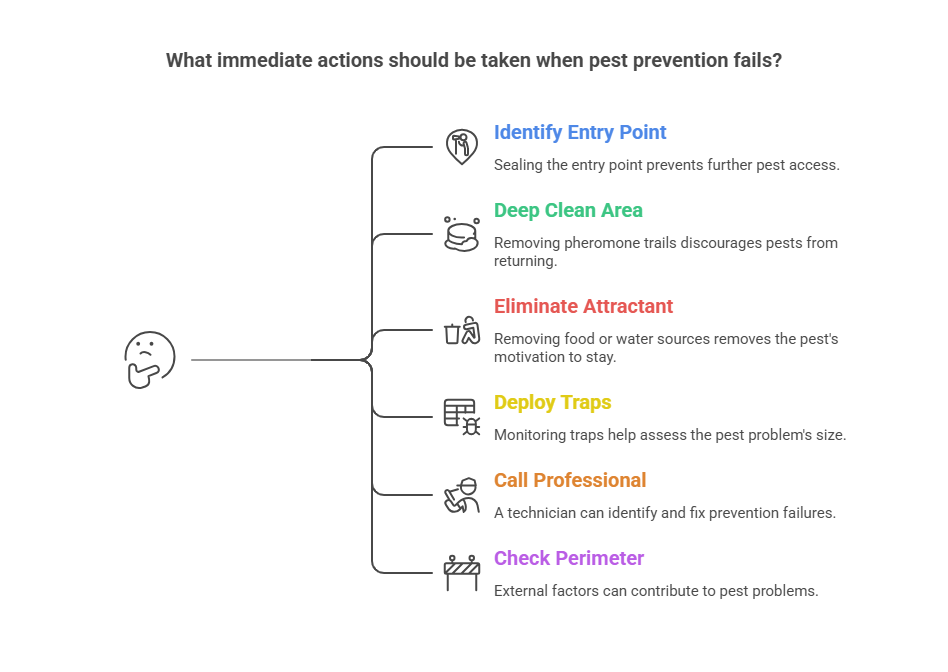
When you realize your efforts to prevent pests in the home have been bypassed, you must act quickly to contain the situation. Swift responses prevent a single visitor from turning into a permanent resident.
Safe Emergency Responses Include:
- Identify the entry point: Trace the pest back to where it entered and seal it temporarily.
- Deep clean the area: Use soapy water to remove pheromone trails left by ants or roaches.
- Eliminate the attractant: Immediately remove the food or water source that drew the pest in.
- Deploy safe traps: Use non-toxic monitoring traps to gauge the size of the problem.
- Call for a professional audit: A technician can identify why your prevention failed and fix it.
- Check the perimeter: Look for external factors like neighbor construction or new mulch piles.
Never ignore a single pest sighting. Pests reproduce exponentially; a lone mouse or cockroach is often a sign that the nearby colony is looking for new territory. Prompt intervention is the most cost-effective way to protect your home.
Professional Prevention Solutions and Strategies
Professional pest prevention involves more than just reactive spraying. It focuses on “Integrated Pest Management” (IPM), which combines physical barriers, hygiene advice, and targeted treatments to create a long-term solution.
Common Professional Prevention Approaches:
- Perimeter Barriers: Applying long-lasting, safe treatments to the exterior foundation.
- Sub-floor and Roof Treatment: Protecting the hidden voids where pests breed.
- Professional Exclusion: Using high-grade materials to seal weep holes and pipe entries.
- Growth Regulators: Using “birth control” for pests to prevent them from reproducing.
- Drain Treatments: Cleaning and treating drains to stop fly and roach breeding.
- Seasonal Monitoring: Setting up stations to detect activity before it reaches your interior.
Investing in professional prevention is far cheaper than paying for repeated emergency removals. At Pest Soldiers, we create custom prevention calendars for our South-East Melbourne clients, ensuring their homes stay protected year-round.
Frequently Asked Questions About Home Pest Prevention
How can I prevent pests in the home naturally?
Natural methods like using peppermint oil for spiders, vinegar for ant trails, and diatomaceous earth for crawling insects can be effective as deterrents. However, these should supplement physical barriers like sealing cracks and maintaining a clean environment.
What is the #1 tip to prevent pests in the home?
Eliminating access to food and water is the most effective strategy. If pests cannot find sustenance, they will not stay. Seal your food in airtight containers and fix all plumbing leaks immediately.
Does clutter really attract pests?
Yes. Clutter provides “harborage,” which is a safe place for pests to hide and breed. Cardboard boxes, in particular, are a favorite for cockroaches and silverfish because they provide both shelter and a food source (the glue in the boxes).
Why do I have pests even though my house is clean?
Pests can enter a clean house seeking water or shelter from the weather. They may also be brought in via grocery bags, second-hand furniture, or through tiny structural gaps that haven’t been sealed.
How often should I refresh my pest prevention measures?
You should check your door seals and window mesh every six months. Professional preventative treatments for the perimeter of your home are typically most effective when refreshed annually.
Don’t Wait for an Infestation to Act
Effective strategies to prevent pests in the home are your first line of defense against the health and property risks of Melbourne’s local pests. Pest Soldiers provides expert preventative services across Hallam, Clayton, and the surrounding suburbs. Our licensed team uses advanced detection tools to find vulnerabilities before pests do.
From professional exclusion services to eco-friendly barrier treatments, we provide the peace of mind that comes with a secure, pest-free home. We handle all the hard work, so you don’t have to worry about unwanted guests.
Contact Pest Soldiers today at +61 469 440 886 or visit pestsoldiers.com.au to book your preventative maintenance. Protect your home today before the next pest season begins.