
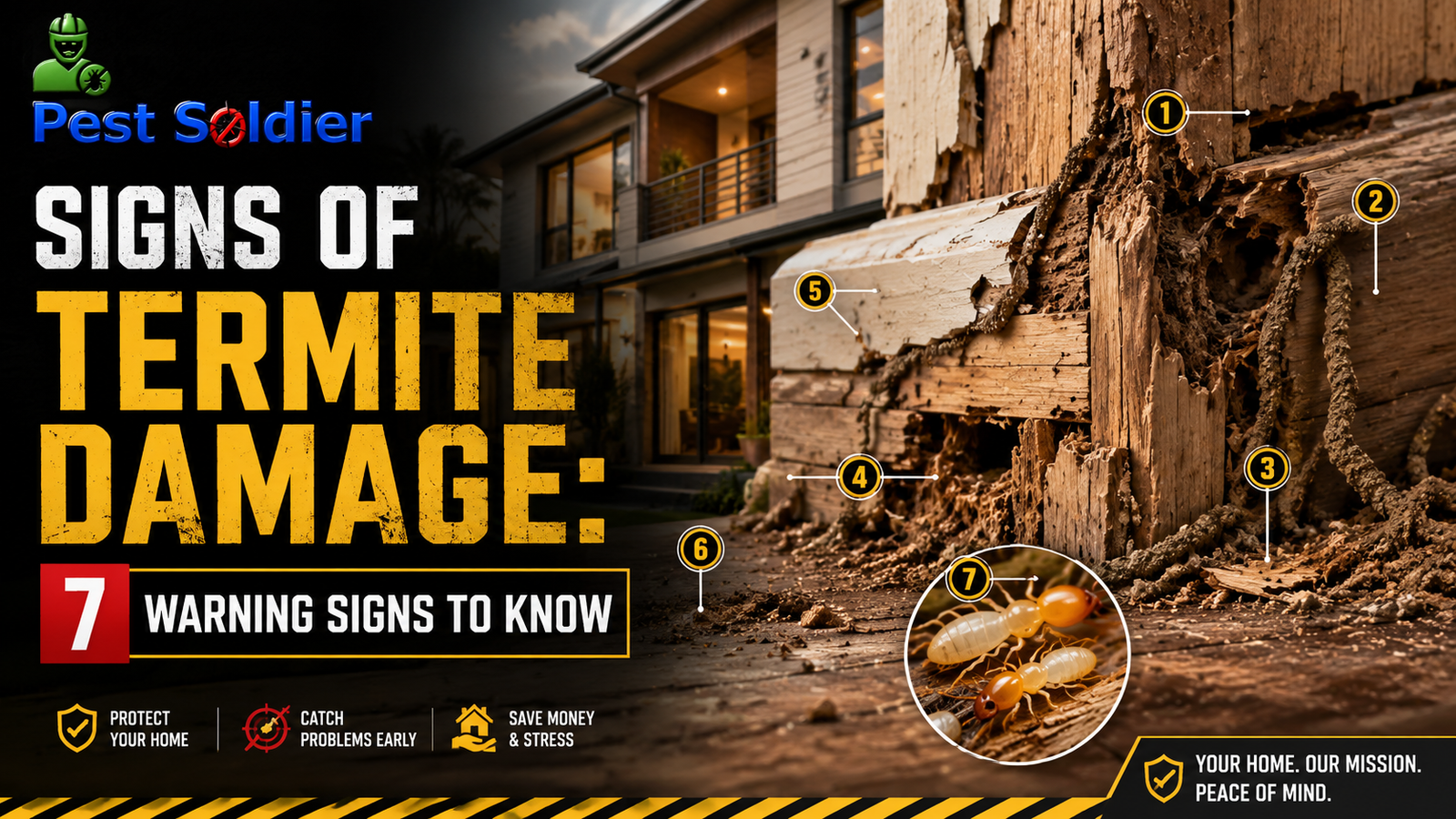
Signs of termite damage can be hard to notice because termites usually work behind walls, floors, timber frames, and hidden structural areas. Many Melbourne homeowners only realise there is a problem after the damage has already become serious.
In Melbourne and South East Melbourne properties, termites can affect homes, rental properties, fences, decking, sheds, and commercial buildings. Pest Soldiers helps property owners identify termite warning signs and arrange professional termite pest control before the problem spreads further.
This guide explains common termite damage symptoms, key inspection areas, risk factors, and when it’s time to call a termite control professional.
What Are Signs of Termite Damage & Why They Matter
Signs of termite damage are visible or hidden clues that termites may be feeding on timber or moving through your property. These signs matter because termite activity can weaken structures, damage timber, and create expensive repair problems if ignored.
Termite infestation signs are not always obvious. Some properties show only small warning signs, while others have hidden activity behind walls or under floors. The Victorian Building Authority termite guide also explains that termites can damage timber from the inside, which is why early inspection is important.
Understanding the early signs of termite damage can help homeowners act before timber damage spreads deeper into the property.
Key things that influence termite damage risk:
- Moisture near timber, soil, or foundations
- Timber touching soil around the property
- Poor ventilation under floors or around subfloors
- Cracked walls, gaps, and hidden access points
- Untreated timber, garden sleepers, decking, or fences
Signs of Termite Damage – Key Factors You Need to Know
Termite damage is not always easy to confirm from one sign alone. Some warning signs may look like normal timber ageing, moisture damage, or general wear around the home.
That is why it helps to understand the most common signs of termite damage before deciding the next step. The table below highlights key warning signs, their risk level, and what each sign may mean for your property.
| Factor | Impact Level | Short Explanation |
|---|---|---|
| Mud Tubes | High | Termites may build mud tubes to move safely between soil and timber. |
| Hollow Timber | High | Timber may sound hollow when tapped if termites have eaten inside. |
| Tight Doors or Windows | Medium | Termite damage can cause timber movement and frame distortion. |
| Droppings or Frass | Medium | Some termite activity may leave small pellet-like droppings. |
| Bubbling Paint | Medium | Moisture and termite activity can make paint look uneven or blistered. |
These signs of termite damage should be checked carefully because some symptoms may look like normal moisture, ageing timber, or general building wear. A proper termite inspection is important before assuming the cause.
Smart Tips to Identify Termite Damage Early
Many homeowners only check visible timber, but termites often start in hidden or low-access areas. To identify termite damage early, tap exposed timber and listen for hollow or papery sounds, look for mud tubes around foundations, walls, fences, and subfloors, and check skirting boards, door frames, window frames, and flooring for unusual changes.
You should also watch for doors or windows that suddenly become hard to close, inspect decking, fences, garden sleepers, and timber near soil, and reduce moisture around the property, especially near foundations. If you notice small signs of termite damage around skirting boards, timber floors, or door frames, do not ignore them. Book a professional termite inspection before the problem becomes more serious.
Why Choose Pest Soldiers for Termite Damage Inspection
Pest Soldiers provides professional termite damage inspection for homes, rental properties, commercial buildings, landlords, and property managers across Melbourne and South East Melbourne. Our team combines local pest knowledge with careful inspection methods to identify visible termite warning signs as well as hidden risk areas that are easy to miss.
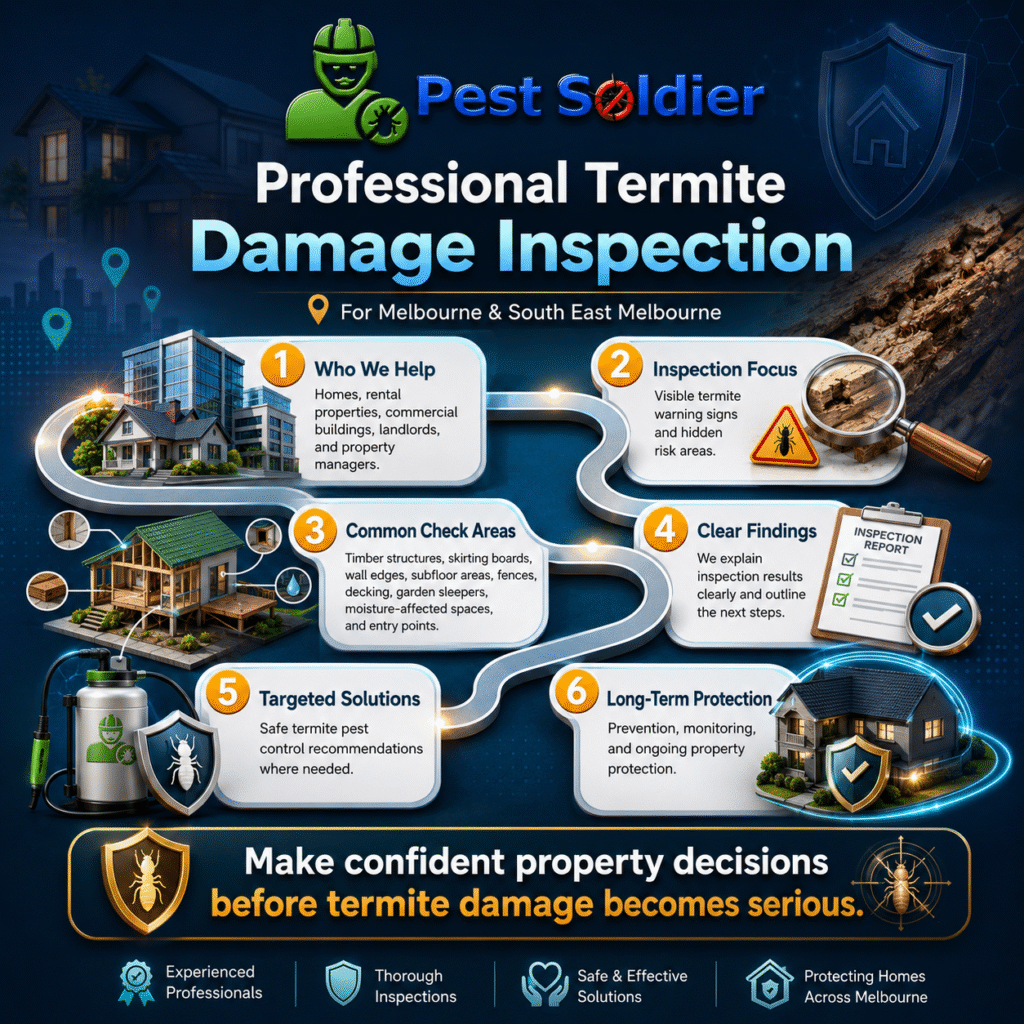
We check common termite-prone zones such as timber structures, skirting boards, wall edges, subfloor areas, fences, decking, garden sleepers, moisture-affected spaces, and other possible entry points. After the inspection, we explain the findings clearly, outline the next steps, and recommend safe, targeted termite pest control solutions where needed. Our approach focuses not only on current termite activity but also on prevention, monitoring, and long-term property protection, so you can make confident decisions before the damage becomes more serious.
How Much Does Termite Inspection or Treatment Cost?
Termite costs vary depending on property size, infestation level, access areas, and treatment method. A simple inspection may be straightforward, while active termite treatment or prevention planning can require more detailed work. If signs of termite damage are already visible, the inspection may need to cover more areas to understand the level of risk.
Main determinants include:
- Size and layout of the property
- Whether termites are active or suspected
- Access to subfloors, roof spaces, and timber areas
- Level of structural risk
- Treatment and monitoring requirements
Termite Inspection Tier Guide
Termite inspections can vary depending on the property condition, access areas, and whether there are visible warning signs. A small visual check may be enough for low-risk areas, but suspected activity usually needs a more detailed inspection.
The guide below gives a simple breakdown of termite inspection levels, typical effort, and what each option usually includes before final recommendations are made.
| Type | Typical Effort | Notes |
|---|---|---|
| Basic Check | Low | General visual review of obvious risk areas |
| Standard Inspection | Medium | Detailed inspection of key termite zones |
| Active Treatment | High | Treatment plan based on confirmed termite activity |
Final recommendations depend on inspection findings and the property condition.
Strategic Insights: What Really Affects Termite Risk
Termite control is a long-term property protection issue. The best results come from early detection, moisture control, timber management, and professional inspection. The earlier you identify signs of termite damage, the easier it is to reduce risk and protect your property.
Key strategic levers:
- Don’t wait for major visible damage
- Keep timber away from direct soil contact
- Fix leaks and reduce moisture near foundations
- Inspect fences, decking, and outdoor timber
- Schedule termite inspections if your property is at risk
Poor planning can allow termites to stay active for months before detection. For extra homeowner guidance, the Victorian Building Authority termite guide is a useful external resource about termite risks and prevention.
Planning Your Termite Inspection Step by Step
A termite inspection is more useful when you prepare the key areas before the technician arrives. Simple steps like checking visible timber, noting moisture issues, and avoiding disturbance can help the inspection process become more accurate.
Use the checklist below to organise what to look for before booking professional termite support.
- Check timber, walls, skirting boards, doors, and windows
- Look for mud tubes and damaged outdoor timber
- Note any moisture, leaks, or drainage issues
- Avoid disturbing suspected termite activity
- Contact a professional before applying DIY chemicals
- Keep inspection records for future property maintenance
For professional help, visit our termite pest control service.
FAQs About Signs of Termite Damage
What is the biggest warning sign of termite damage?
The most common signs of termite damage include mud tubes, hollow timber, bubbling paint, tight doors, damaged skirting boards, and unusual timber movement.
Can termite damage be hidden?
Yes. Termites often feed inside timber, walls, floors, and structural areas before visible damage appears.
Should I use DIY termite treatment?
DIY treatment can disturb termites and make the problem harder to track. A professional termite inspection is usually the safer option.
How often should I check for termites?
Properties with timber, moisture, garden sleepers, decking, or previous pest issues should be checked regularly by a professional.
Can termites damage rental properties?
Yes. Rental homes, apartments, commercial sites, and older buildings can all be affected by termite activity.
When should I call Pest Soldiers?
Call Pest Soldiers if you notice any signs of termite damage, such as mud tubes, hollow timber, bubbling paint, tight doors, damaged skirting boards, or suspected termite activity.
Protect Your Property from Hidden Termite Damage Today!
Don’t leave your home or investment property exposed to silent termite damage. Whether you have noticed warning signs or simply want peace of mind, Pest Soldiers can inspect your property and provide practical termite prevention and treatment support. Our team offers reliable, safe, and professional termite control solutions for homes and businesses across Melbourne and South East Melbourne. Book your termite inspection today.
Phone: +61 469 440 886
Email: iqbal@pestsoldiers.com.au
Address: 25 Gibson Street, Hallam VIC 3803, Australia
Website: pestsoldiers.com.au