Termites eat quietly. They work 24/7. They destroy homes from the inside out. By the time you notice, damage often exceeds tens of thousands of dollars.
Your home in Hallam or South-East Melbourne sits in a high-risk zone. Victoria’s climate suits termites perfectly. Warm summers and mild winters let colonies thrive year-round. This guide explains how Termite Barriers and Inspections save your biggest investment. You’ll learn prevention strategies. You’ll spot warning signs early. You’ll protect your family’s future.
Understanding Your Enemy: Subterranean Termites
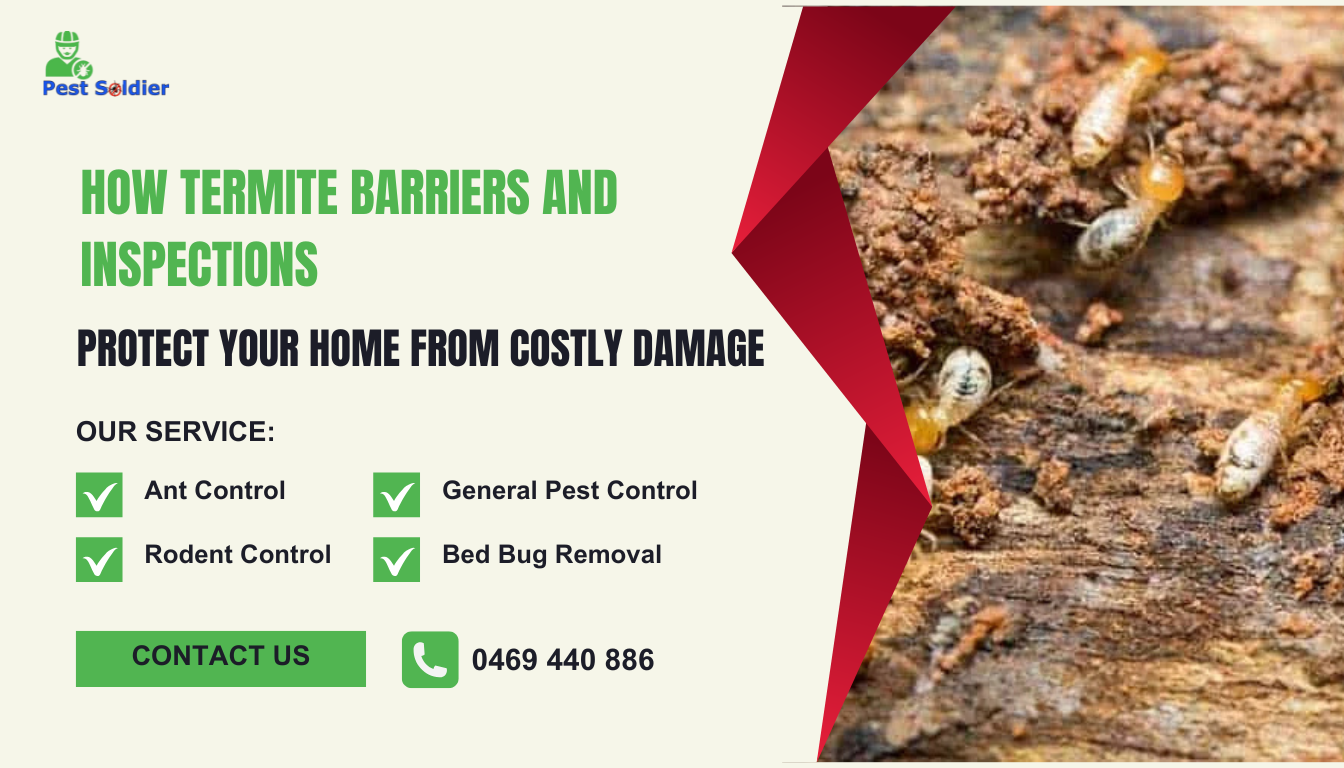
Australia hosts over 300 termite species. Subterranean termites cause most damage to homes. They live underground. They build mud tunnels to reach food sources.
These insects consume cellulose. Wood provides their primary nutrition. They also eat paper, cardboard, and some fabrics. A single colony contains millions of workers. They forage up to 50 metres from their nest. Your neighbor’s problem quickly becomes yours. Termites cause more property damage than fires, floods, and storms combined. Insurance rarely covers these costs. Prevention becomes essential.
How Termites Enter Homes
These clever invaders find many paths inside. Understanding entry points helps you block them. Through soil-to-wood contact: Fence posts, garden beds, and stored lumber touching your house create bridges. Termites walk directly from the ground to the structure. Via cracks in concrete: Slab foundations develop hairline fractures. Termites squeeze through gaps just 2mm wide.
Around plumbing penetrations: Pipes enter through foundation holes. These openings often lack proper sealing. Through expansion joints: Concrete slabs contain control joints. Termites exploit these gaps easily. Under the slab: Some species tunnel beneath foundations. They enter through gaps in the vapor barrier.
Via roof leaks: Moisture-damaged roof timber attracts termites. They establish colonies in walls and ceilings. Knowing these entry methods shapes your defense strategy.
Termite Barriers: Your First Line of Defense
Termite barriers create protective zones around structures. They force termites into the open. Visible activity reveals their presence. Two main types exist. Each offers distinct advantages.
Chemical Termite Barriers
These systems treat the soil around foundations. They create treated zones that termites cannot cross. Modern products use non-repellent chemistry. Termites don’t detect these chemicals. They walk through treated areas. They carry poison back to the colonies. Entire nests die gradually.
Installation requires professional expertise. Technicians trench around foundations. They treat soil at specific rates. They drill through concrete paths and patios. They ensure continuous protection. These barriers last 5-8 years. Regular inspections monitor effectiveness. Reapplication maintains protection long-term.
Physical Termite Barriers and Inspections
These systems use materials that termites cannot penetrate. They install during construction. They also retrofit existing homes. Stainless steel mesh: Fine-grade steel blocks termite passage. Installers position this around pipes and slab edges.
Granite barriers: Crushed rock particles too large for termites to move. They create impassable zones. Ant caps: Metal shields on piers and stumps. They force termites into view. You spot mud tubes easily. Composite systems: New materials combine physical blocking with chemical properties. Physical barriers last indefinitely. They require no retreatment. They work best when combined with chemical systems for maximum protection.
Pre-Construction Termite Barrier: Building Smart
New builds offer perfect protection opportunities. Pre-construction termite barrier installation costs less. It integrates seamlessly with construction. Installers treat soil before pouring slabs. They lay physical barriers under and around foundations. They coordinate with builders. They ensure complete coverage. This approach eliminates retrofit challenges. No drilling through finished concrete. No trenching through established gardens. No disruption to your daily life.
If you plan to build in Hallam or the surrounding suburbs, ensure you include termite protection in the demand. Include it in your building contract. Specify products and warranty terms. Existing homeowners need retrofit solutions. These require more labor. They cost more initially. They still deliver excellent protection. Don’t skip protection because your home already stands.
Termite Inspections: Early Detection Saves Thousands
Barriers work continuously. But they need monitoring. Termite inspections provide this critical oversight. Australian standards recommend annual inspections. High-risk areas need more frequent checks. Every 6-12 months suits Melbourne’s conditions.
Professional inspectors examine your entire property. They check:
Interior spaces: Skirting boards, door frames, window sills, and exposed timber. They tap timbers listening for hollow sounds. They probe suspicious areas. Roof voids: Trusses, rafters, and top plates. They use moisture meters. They identify damp conditions that termites prefer. Subfloor areas: If your home has a crawl space, inspectors examine every corner. They check for mud leads and damaged timber.
Exterior perimeter: Garden beds, fences, and outbuildings. They identify conditions encouraging termite activity. Barrier integrity: They verify chemical zones remain active. They check physical barriers for damage. Detailed reports document findings. They include photographs. They recommend actions. They maintain records for warranty purposes.
Signs of Termite Infestation You Must Know
Watch for these warning signals between professional visits:
Mud tubes: Pencil-thick tunnels on walls or foundations. Termites build these for protected travel. Break them open. Look for live insects. Hollow timber: Tap wooden structures. Solid wood sounds dull. Hollow sounds suggest internal damage. Discarded wings: Reproductive termites swarm in spring. They shed wings after mating. Piles near windows indicate nearby colonies.
Tight doors and windows: Moisture from termite activity warps timber. Sticking doors signal trouble. Cracked or bubbling paint: Moisture behind walls pushes paint outward. This often reveals hidden nests. Frass: Termite droppings resemble sawdust. They appear near kick-out holes in timber. Noises: Some homeowners hear clicking sounds. Soldier termites bang heads to signal danger. Spot any sign? Call professionals immediately. Don’t wait. Don’t spray with supermarket products. Disturbed colonies relocate. They become harder to treat.
Termite Treatment Methods: When Prevention Isn’t Enough
Sometimes termites breach defenses. Active infestations require immediate action. Baiting systems: Technicians install stations around your home. They contain cellulose material. Termites feed and return to colonies. Technicians then add a slow-acting toxin. Entire nests die. This method suits sensitive environments. It uses minimal chemicals. It eliminates colonies. Dusting: Fine powder applied directly to active areas. Termites carry it throughout nests. It works fast for localized infestations. Foaming: Expanding foam reaches voids and galleries. It fills termite tunnels. It provides residual protection. Fumigation: For severe drywood termite infestations. This tenting method affects entire structures. It requires temporary evacuation.
Your pest professional recommends the best approach. They consider termite species. They assess the extent of the infestation. They factor in your family’s needs.
Termite Prevention Australia: National Standards
Australia leads world termite research. Our building codes reflect this expertise. AS 3660.1 covers new building protection. AS 3660.2 addresses existing structures. These standards mandate protection levels based on risk zones. Melbourne is in a moderate-to-high-risk region. Local councils enforce these standards. They protect property values. They ensure community safety. When selecting pest control providers, verify that they comply with Australian Standards. Ask about their qualifications. Check their licensing. Ensure they carry proper insurance. Cheap quotes often indicate shortcuts. Proper protection requires quality materials. It demands skilled installation. It needs ongoing commitment.
Long-Term Termite Protection: Your Action Plan
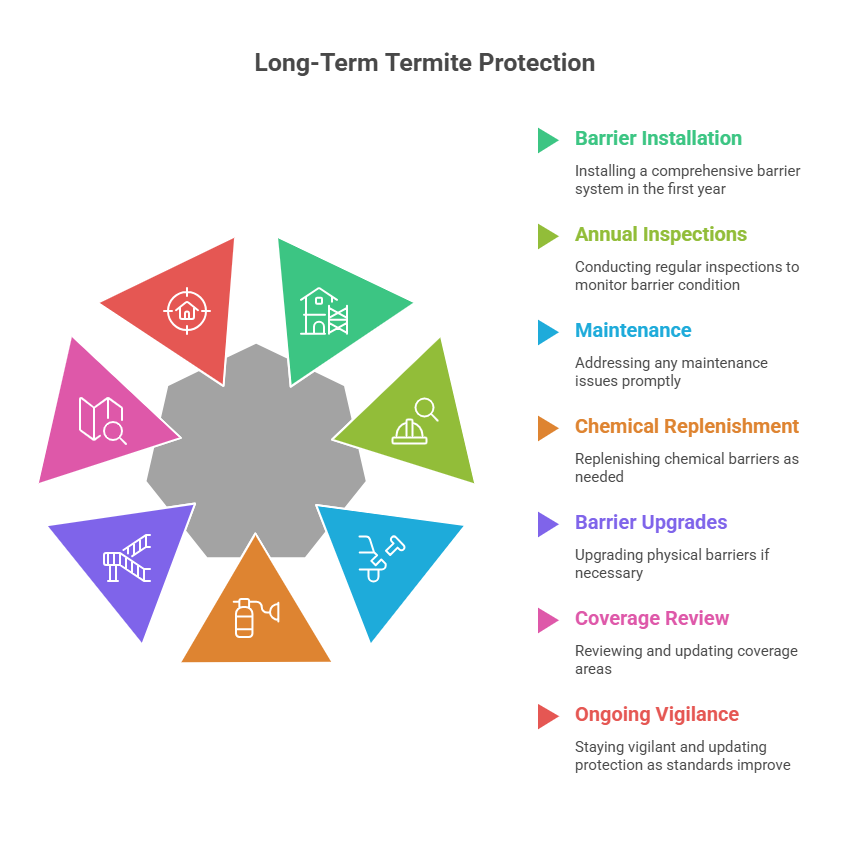
Protecting your home spans decades. Follow this timeline:
Year 1: Install a comprehensive barrier system. Schedule initial inspection. Learn warning signs.
Years 2-5: Maintain annual inspections. Monitor barrier condition. Address maintenance issues promptly.
Years 5-8: Plan chemical replenishment. Upgrade physical barriers if needed. Review coverage areas.
Ongoing: Continue inspections forever. Update protection as standards improve. Stay vigilant always.
Termite protection isn’t a one-time expense. It’s an ongoing investment. Compare it to home insurance. You pay premiums yearly. You hope never to claim. Protection provides similar peace of mind.
Termite Inspection Cost: What to Expect
Prices vary based on property size and complexity. Expect $250-$400 for standard home inspections in South-East Melbourne. This seems expensive. Compare it to treatment costs. Active infestations require $2,000 to $5,000 for localized treatment. Whole-house treatments reach $10,000+. Structural repairs add tens of thousands more. Inspections represent cheap insurance. They catch problems early. They maintain warranty validity. They protect your investment.
Ask what’s included. Comprehensive inspections cover the roof, interior, exterior, and subfloor. Reports should arrive within 24 hours. Photos should document all areas.
Beware unusually cheap quotes. Thorough inspection takes 1-2 hours. Rushed inspections miss critical signs.
DIY vs Professional Protection
Some homeowners attempt DIY termite control. They buy hardware store products. They treat the soil themselves. This approach risks your home. Termites are complex. Products require precise application. Mistakes create false security. Termites exploit gaps. Professionals bring expertise. They understand termite biology. They know local species. They access commercial-grade products. They provide warranties. Your home deserves professional care. Don’t gamble with DIY solutions.
Frequently Asked Questions
How often do I need termite inspections in Melbourne?
Schedule inspections every 12 months minimum. High-risk properties need 6-monthly checks. Annual inspection maintains warranty coverage and catches problems early.
What’s the difference between chemical and physical termite barriers?
Chemical barriers treat soil with termiticides. They require replenishment every 5-8 years. Physical barriers are made of materials that termites cannot penetrate. They last indefinitely but perform best when used with chemical systems.
Can I install termite barriers in an existing home?
Yes. Retrofit installation costs more than pre-construction. Technicians drill concrete and trench gardens. They still provide excellent protection. Don’t skip barriers because your home already exists.
Does home insurance cover termite damage?
Standard policies exclude termite damage. Insurers view this as a preventable maintenance issue. Some offer separate termite policies. Check with your provider. Prevention remains your best protection.
How quickly can termites damage my home?
Subterranean termites consume 5-10 grams of wood daily. A large colony can damage significant timber within months. Complete structural compromise takes 3-5 years in severe cases. Early detection prevents catastrophic loss.
Protect Your Home Today
Termites threaten every home in Hallam and South-East Melbourne. They work silently. They strike without warning. They cost homeowners millions yearly.
Termite Barriers and Inspections provide proven protection. They stop invaders before entry. They detect breaches immediately. They save your family’s largest investment. Don’t wait for signs of damage. Act preventively. Install proper barriers. Schedule regular inspections. Maintain vigilance always.
Pest Soldiers specializes in termite protection for homes throughout Melbourne’s southeast. We understand local termite pressures. We install AS 3660-compliant systems. We provide comprehensive inspection services.
Our team holds full licenses and insurance. We use premium products. We guarantee our workmanship. We protect what matters most.
Call us now: 0469 440 886
Visit our website: https://pestsoldiers.com.au/
Email for quotes: iqbal@pestsoldiers.com.au
Find us: 25 Gibson Street, Hallam VIC 3803
We offer emergency inspections and same-day quotes. Termite damage prevention starts with one phone call. Make it today.