Termites are the most destructive pests facing homeowners in South-East Melbourne, capable of compromising a building’s integrity without ever being seen. Because they feed on cellulose from the inside out, recognizing the need for regular termite inspections is the only way to prevent catastrophic financial loss. This guide covers the hidden nature of termite damage, the actual costs of neglect, professional detection methods, and long-term prevention strategies. Understanding these risks helps you safeguard your property in Hallam, Clayton, and surrounding suburbs against these silent destroyers.
Understanding the Silent Threat to Melbourne Properties
Australian termites are among the most aggressive in the world, and Melbourne’s climate—with its damp winters and warm summers—provides the perfect environment for subterranean colonies to thrive. Problems develop in total darkness; termites enter through foundation cracks thinner than a coin and tunnel into the structural heart of your home. Most homeowners remain completely unaware of an infestation until the damage is already structural.
The financial risk is the most significant factor. Unlike most household mishaps, termite damage is rarely covered by standard home insurance policies. This means that failing to schedule termite inspections can lead to out-of-pocket repair bills exceeding $50,000. In suburbs with established gardens and older timber-framed homes, the pressure from local colonies is constant, making professional vigilance a necessity rather than an option.
Structural failure is the ultimate consequence of neglect. Termites consume load-bearing beams, floor joists, and roof trusses. Once the core timber is hollowed out, the safety of the entire building is compromised, often requiring extensive reconstruction and temporary relocation for the family.
Visual Signs and Structural Warning Indicators
While termites are experts at hiding, they do leave subtle clues that a trained eye can identify during termite inspections. Recognizing these signs early can be the difference between a simple treatment and a total home rebuild.
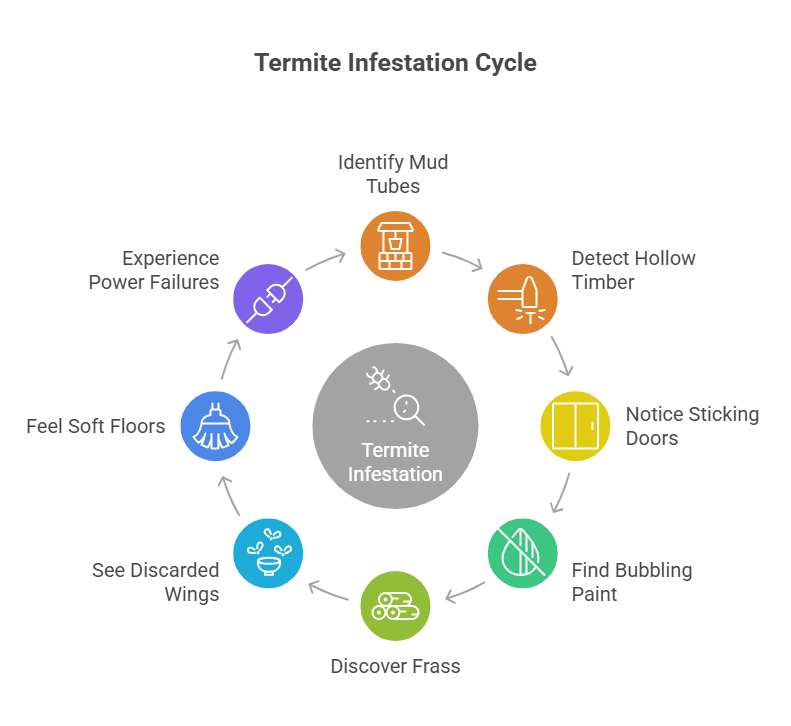
Symptoms indicating an active termite threat include:
- Mud tubes running along external foundation walls or in sub-floors
- Hollow-sounding timber when tapping on skirting boards or door frames
- Sticking doors or windows that suddenly become difficult to open
- Bubbling paint or moisture spots on walls that look like water damage
- Fine “sawdust” (frass) found near timber joins or window sills
- Discarded wings near entry points following a humid “swarm” night
- Soft or springy floors that feel unstable when walked upon
- Power failures caused by termites chewing through electrical insulation
In South-East Melbourne, these signs are often dismissed as “house settling” or humidity. However, these are red flags that the home’s structural integrity is being actively compromised. Professional termite inspections verify these symptoms using specialized technology to confirm the presence of a colony before it spreads further.
| Inspection Component | Detection Method | Danger Level | Typical Solution |
| Foundation Audit | Mud tube identification | High | Chemical soil barrier |
| Timber Density Test | Tapping & moisture meters | Very High | Localized foam treatment |
| Wall Cavity Scan | Thermal imaging cameras | Extreme | Baiting system installation |
| Sub-floor Check | Visual & moisture probe | High | Drainage & ventilation fix |
| Garden/Stump Review | Perimeter scouting | Medium | Removal of bridge sources |
The True Cost: Inspection vs. Structural Repair
The cost of regular termite inspections is a minor investment when compared to the reality of structural repairs. In Melbourne, an annual inspection typically costs between $250 and $450, providing a comprehensive report and peace of mind. In contrast, the average cost of termite-related repairs in Australia is estimated at over $10,000, with severe cases reaching much higher.
Neglecting prevention creates a massive “risk gap.” A chemical barrier or baiting system might cost a few thousand dollars but lasts for years. Without these protections, your home is essentially an open buffet for local subterranean colonies. Proactive management is the only way to ensure your property value remains intact and your family stays safe.
Detecting Hidden Colonies with Advanced Technology
You cannot effectively perform termite inspections yourself. Termites hide deep within the structure where flashlights and mirrors cannot reach. Professional inspectors use a suite of high-tech tools to “see” through walls and floors.
At Pest Soldiers, we utilize Thermal Imaging Cameras to detect the heat signatures generated by large termite colonies. We also use Moisture Meters to find the damp spots that termites require for survival. These tools, combined with Borescopes for looking inside wall cavities, allow us to provide a 100% accurate assessment of your home’s status.
Professional Termite Inspection Checklist Includes:
- Scanning all interior walls and ceilings with thermal sensors
- Probing all accessible structural timbers for hollow zones
- Inspecting the sub-floor and roof void for mud galleries
- Checking the external perimeter and weep holes for entry points
- Auditing the garden, including fences, stumps, and retaining walls
- Assessing moisture levels near plumbing and “wet areas.”
- Providing a detailed digital report with photos and a treatment plan
Immediate Actions if Termites are Discovered
If you find signs of termites during or between termite inspections, your reaction is critical. The wrong move can actually make the infestation harder to treat.
Safe Emergency Responses Include:
- Do Not Disturb the Pests: If you find a mud tube or hollow wood, do not break it open. Termites will retreat and start a new gallery elsewhere, making them harder to track.
- Do Not Spray DIY Chemicals: Household bug sprays only kill the termites on the surface and cause the rest of the colony to scatter and hide.
- Seal the Area: If you find a breach, you can tape over it with masking tape to keep light and air out, which keeps the termites in place for a professional to treat.
- Call for a Professional Kill: Only commercial-grade non-repellent transfers can eliminate the queen and the entire nest.
- Identify the Source: Look for recent landscaping or wood-to-soil contact that may have invited the colony in.
Speed is essential. A mature colony can consume several hundred grams of timber a day. The sooner a professional technician can apply a “transfer” treatment, the less timber you will have to replace.
Professional Prevention and Treatment Strategies
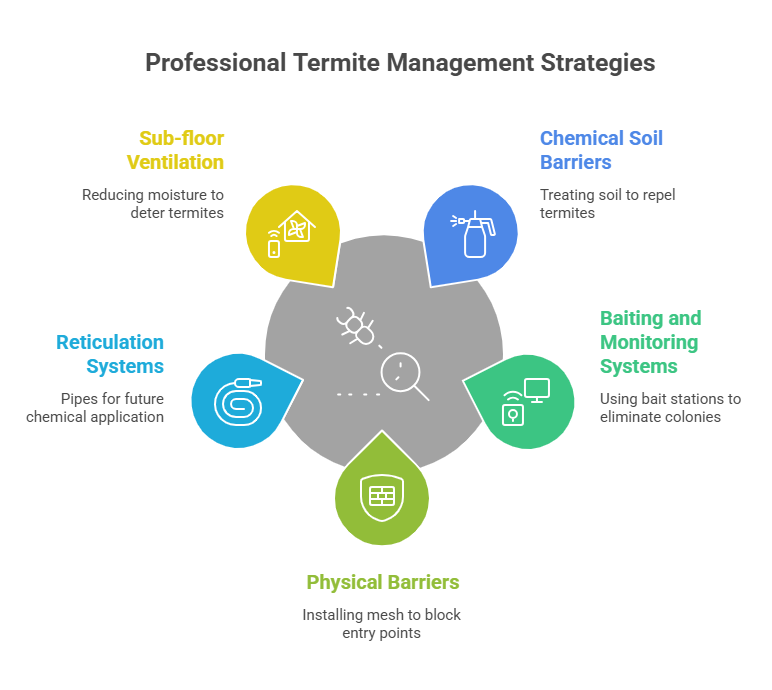
Effective termite management involves multiple layers of defense. Based on the findings of our termite inspections, we recommend a tailored strategy that fits your home’s construction and your budget.
Common Professional Termite Solutions:
- Chemical Soil Barriers: Treating the soil around your foundation to create a “no-go” zone for termites.
- Baiting and Monitoring Systems: Installing stations around the property that termites feed on, carrying the bait back to the nest to eliminate the colony.
- Physical Barriers: Installing mesh or granules during renovations to permanently block entry points.
- Reticulation Systems: Installing pipes under the soil that allow for easy re-application of chemicals in the future.
- Sub-floor Ventilation: Reducing the moisture that attracts termites in the first place.
At Pest Soldiers, we focus on long-term results. We don’t just kill the termites we find; we implement systems that prevent them from ever coming back, backed by regular follow-up audits.
Frequently Asked Questions About Termite Inspections
How often should I have termite inspections in Melbourne?
The Australian Standard recommends at least one professional inspection every 12 months. However, if you live in a high-risk area (near bushland or in an older suburb like Clayton), bi-annual inspections provide much better protection.
How long does a professional termite inspection take?
A thorough inspection for an average-sized home takes between 1.5 and 2 hours. If a technician claims to be done in 30 minutes, they are likely missing critical hidden areas like the roof void or sub-floor.
What is the best termite treatment in Australia?
There is no “one-size-fits-all” answer. Chemical barriers are excellent for slab-on-ground homes, while baiting systems are often better for homes with complex foundations or environmentally sensitive areas. A professional inspection will determine the best fit for you.
Can I detect termites myself with a DIY kit?
DIY kits can sometimes find active termites, but they cannot tell you where the nest is or how much structural damage has already occurred. They also offer no guarantee of colony elimination. Only a professional inspection provides a complete “health check” of your home.
Are termite treatments safe for my garden and pets?
Yes. Modern non-repellent chemicals are designed to bind to the soil and stay exactly where they are applied. We also offer baiting systems that involve zero chemical spraying, making them ideal for homes with pets and children.
Don’t Risk Your Largest Asset—Book an Inspection Today
Termites are a constant threat to Melbourne properties, but they don’t have to be a disaster. Pest Soldiers delivers the comprehensive termite inspections South-East Melbourne homeowners trust to keep their properties safe. With a decade of local experience and the latest detection technology, we find what others miss and provide solutions that actually work.
From emergency treatments to preventative barriers, we protect your home from the ground up. Don’t wait for a sagging floor or a sticking door to tell you there’s a problem.
Contact Pest Soldiers today at +61 469 440 886 or visit pestsoldiers.com.au to book your professional termite inspection. Invest in prevention before the damage becomes a crisis.