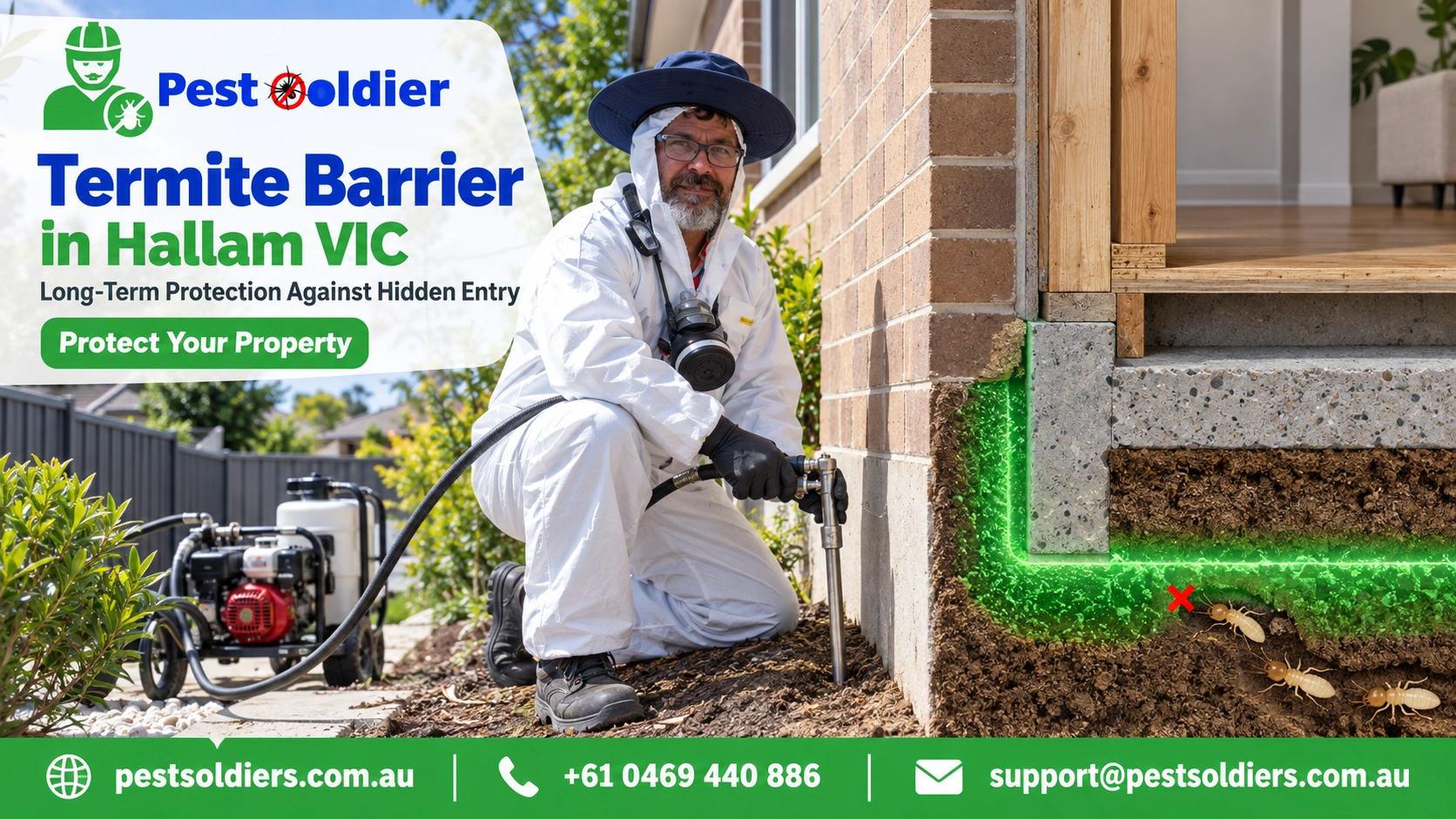
A termite barrier is a system designed to restrict concealed termite entry or control termites moving through treated areas around a building. Choosing a Termite Barrier in Hallam starts with inspecting the property, identifying existing activity and assessing how the building meets the ground. The appropriate system depends on construction, access and maintenance needs.
For homeowners, landlords and business owners, the aim is straightforward: reduce the chance of hidden timber damage and make future problems easier to detect. A barrier supports that goal, but it does not replace inspections or repairs to conditions that leave the building vulnerable.
This guide explains the main options, what installation planning involves, which factors affect cost and how to look after a system once it is installed. Pest Soldiers provides pest control services in Hallam, with property assessment forming the starting point for practical advice.
What Does a Termite Barrier Actually Do?
A barrier addresses potential routes between termites and the building. Depending on the system, it may form a treated soil zone, physically obstruct concealed access or direct termite movement into an area where an inspector can see it.
The important distinction is between managing entry and treating an established infestation. A building with active termites may need targeted colony management as well as a plan for future access. Installing something around the perimeter does not automatically resolve activity already inside.
It also helps to distinguish a barrier from other measures. Bait stations, moisture repairs and inspections can all contribute to management, but they perform different jobs. Ask what each part of a proposal is intended to achieve and how its performance will be checked.
The Victorian Department of Health’s educational guide to termite control describes physical barriers, chemical methods and baiting, and explains why reducing access to timber and moisture matters. It specifically distinguishes baiting from a barrier that isolates a building.
Why the Individual Hallam Property Matters
A suburb name cannot determine the right treatment. Two properties in the same Hallam street may need different approaches because one has an accessible subfloor while the other has a concrete slab surrounded by paving.
The assessment should consider the building and its surroundings together. Timber framing, decks, extensions, attached garages, retaining structures and garden beds can create different inspection or treatment challenges. Recent landscaping also matters when it changes soil levels or covers previously visible areas.
Tell the inspector about leaks, drainage problems and earlier repairs, even if they seem unrelated. A repaired bathroom leak, for example, is useful background when assessing nearby timber and moisture readings.
Avoid assuming that a newer home needs no attention or that an older home automatically needs the most expensive system. Condition, access, treatment history and inspection findings provide a better basis for a decision than age alone.
Comparing the Main Management Options
Chemical soil treatments
A chemical termite barrier involves applying a suitable termiticide to specified soil areas associated with a building. Installation may require trenching, drilling through hard surfaces or a combination of access methods, depending on the property and product directions.
Ask the technician to explain the proposed coverage on a plan. A continuous treatment strategy, access limitations and the handling of difficult sections matter more than a general promise to spray around the house.
Before accepting the quote, establish what preparation is needed and whether paths, garden edging or other surfaces will be disturbed. Also ask who is responsible for reinstatement and how completed work will be documented.
Physical systems
A physical termite barrier uses designed materials or construction details to obstruct concealed entry or make attempted access visible. These systems are commonly considered during new construction or suitable renovation work.
For an existing home, availability of access is a central question. Ask which parts can realistically be addressed, whether the proposed work connects with an existing system and what remains outside the scope.
If you are planning an extension, raise the issue before construction starts. The connection between new and existing work deserves attention, along with the inspection access that will remain after completion.
Reticulation systems
Reticulation uses installed pipework to deliver treatment to designated soil zones and allow replenishment where the system is suitable. It is a delivery arrangement with its own layout and service requirements.
If your property already has one, provide the installation plan and servicing history. Ask the technician to confirm the system’s condition, the areas it serves and the requirements for its next service.
Baiting and monitoring
Baiting programmes use stations and planned servicing to manage termite activity. They may be considered alongside other measures or where a soil treatment is unsuitable. They do not create a physical wall around the property.
When comparing a baiting proposal with a soil treatment, compare the full programme: initial setup, monitoring visits, treatment stages and future costs. The cheapest installation price may describe a different service scope.
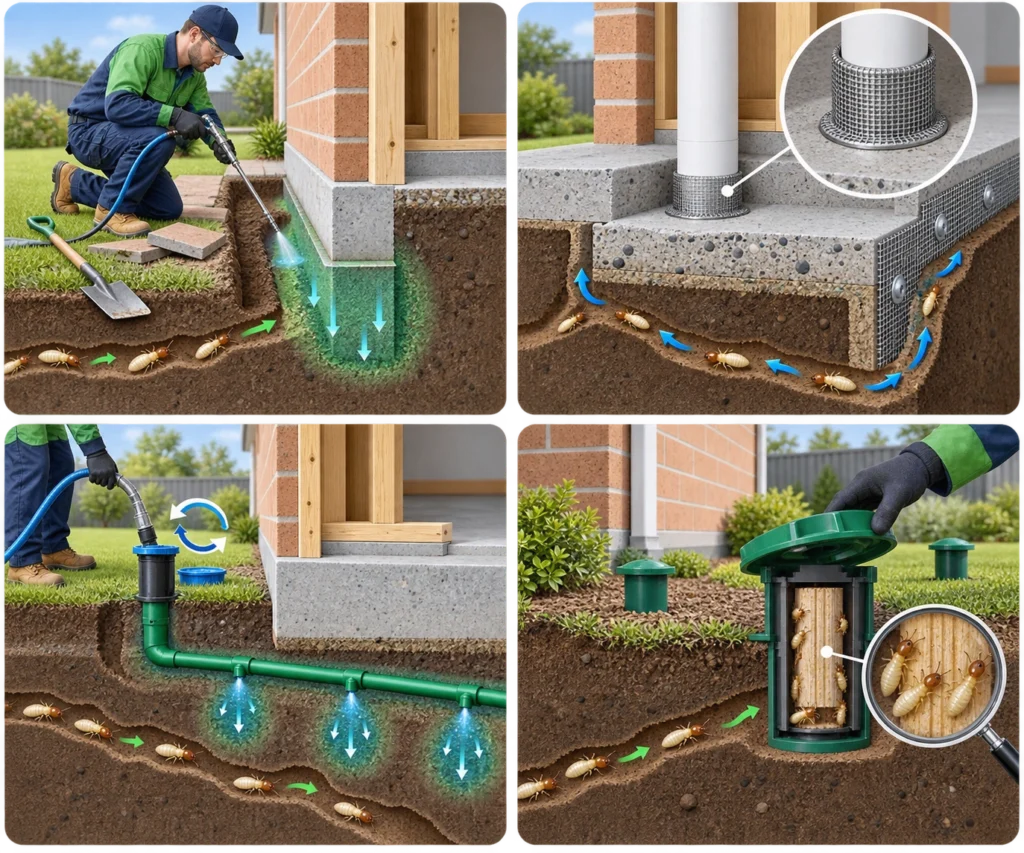
| Option | Main role | Key question before choosing |
|---|---|---|
| Soil treatment | Establish a treated zone | Can the required areas be accessed and treated? |
| Physical system | Obstruct or expose concealed entry | Can it be installed correctly within this construction? |
| Reticulation | Deliver and replenish soil treatment | What areas does the installed network serve? |
| Baiting programme | Monitor and manage activity | What servicing and follow-up are included? |
| Inspection and maintenance | Detect issues and preserve access | What schedule and owner actions are required? |
Choosing a Termite Barrier in Hallam
Start with a written assessment rather than a preferred product. A useful recommendation connects the findings to the proposed method: what was observed, what risk it presents and why the selected approach suits the building.
Arrange a professional termite inspection and provide earlier reports if available. Pest Soldiers describes internal and external assessment, reporting and treatment recommendations on its inspection page.
Use the inspection discussion to clarify three issues:
- Current condition: Was activity or damage identified, and which areas were inaccessible?
- Proposed action: What work is recommended now, and what further investigation is needed?
- Future care: How will the system be maintained and the property reinspected?
An access limitation should be clearly recorded. It should not disappear beneath a broad statement that the property has been checked. If storage, locked rooms or restricted subfloor access prevented inspection, ask what would be needed to assess those areas later.
For a recently purchased home, gather the previous owner’s reports before assuming that an existing system is current. A receipt alone may not explain coverage, product details or maintenance conditions.
Two Examples of Planning Around the Building
These hypothetical examples show why a site assessment matters; they are not reports of completed Pest Soldiers jobs.
A slab home with paving on three sides: The owner wants a preventive treatment but has no previous installation records. The useful first step is to establish the building’s condition and available access. A proposal should identify the paved sections, explain any drilling, record inaccessible areas and describe how the remaining perimeter will be managed. Before booking, the owner should also clarify arrangements for moving outdoor furniture and reinstating disturbed surfaces.
An older home receiving a rear extension: The owner has an existing management plan and is about to add a new room and deck. The immediate question is how the extension will affect the original system and inspection access. Bringing the builder and pest professional into the discussion before work starts allows those details to be addressed in the scope. Once construction is complete, the records should show what changed and what needs future attention.
Neither scenario justifies selecting a product from photographs alone. The useful outcome is a documented decision that accounts for the building as it exists and the changes already planned.
What Happens During Installation Planning?
Inspection and site mapping
The technician assesses construction, likely access points, moisture concerns and available working space. For a slab home, this may include the perimeter and service penetrations. For a building with a subfloor, access beneath the structure can affect the proposal.
Show the technician areas that concern you. Explain when changes appeared and whether building or plumbing work has taken place nearby. Photographs and dates can make that discussion more useful.
Written scope and preparation
Ask for the proposed method, treatment areas, exclusions and preparation instructions in writing. The scope should explain whether drilling or trenching is anticipated, how difficult sections will be managed and whether further investigation could change the quote.
Agree on practical arrangements before the visit: moving stored items, opening gates, arranging access through a rental property and keeping vehicles away from working areas. Tell the provider about planned landscaping so the sequence of work can be discussed.
Installation and handover
Application requirements depend on the chosen system and product. Follow the technician’s instructions for access during the work and afterwards; do not assume that advice from a different pest treatment applies.
At handover, request a record of the work, relevant product or system information, maintenance requirements and any warranty terms. Ask the technician to identify areas you need to keep visible and explain when the next inspection or service is due.
What If Termites Are Already Active?
Suspected activity changes the priority. The first task is to assess what is happening, rather than choose a preventive package from a website description.
Avoid breaking open affected timber or spraying household insecticide onto suspected termite activity before obtaining professional advice. Record the location and take photographs if this can be done without disturbing the area. Tell the provider whether the signs are indoors, beneath the building or in garden timber.
Pest Soldiers’ termite pest control service explains its assessment and management approach. Ask how treatment of current activity would fit with any proposed perimeter work and what follow-up would confirm progress.
If damage may affect a structural component, ask whether a separate building assessment is needed. Pest treatment and repairs address different problems, so clarify who will inspect, quote for and complete each part.
What Affects the Cost?
The cost of a Termite Barrier in Hallam depends on the work required at the specific property. Building size matters, but accessible perimeter, construction details, existing activity and the proposed system can change both installation effort and ongoing commitments.
A meaningful quote separates the initial assessment, any active treatment, installation and future servicing. This makes it easier to compare offers without confusing a one-off visit with a continuing programme.
| Cost factor | Why it can change the quote | What to clarify |
|---|---|---|
| Building layout | Extensions and irregular perimeters affect scope | Which structures are included? |
| Concrete and paving | Access may require drilling or additional work | Is surface reinstatement included? |
| Soil and subfloor access | Restricted areas complicate assessment or installation | Are any areas excluded? |
| Existing activity | Additional treatment may be required | Is this a separate charge? |
| Previous system | Records and condition influence the proposal | Can it be serviced or needs reassessment? |
| Follow-up requirements | Inspection and servicing create future costs | What is included after installation? |
For the assessment stage, review Pest Soldiers’ termite inspection cost information. An inspection price is separate from a barrier installation price; request a property-specific quote for the proposed work.
Ask whether GST, follow-up visits and any agreed reinstatement are included. If two quotes differ substantially, compare their drawings, exclusions and maintenance schedules before choosing on price alone.
How Long Does a System Last?
There is no single lifespan that applies to every property and method. Expected service life, inspection frequency, replenishment requirements and warranty conditions are separate details that should be explained for the selected system.
Ask for those details in writing. A warranty period does not tell you everything about the work required during that period, and a scheduled service date does not replace an assessment after significant property changes.
Keep a simple record containing the installation date, provider, treatment plan, service history and next appointment. Add notes when plumbing, paving, landscaping or extensions alter the areas around the building.
If you cannot locate the original paperwork, arrange an assessment rather than assume that the system has expired or remains effective. The visible condition and available records need to be considered together.
Maintaining the Property After Treatment
Long-term termite protection depends on looking after the building and preserving the conditions needed for inspection and servicing. Ask your technician for instructions specific to your property.
Keep inspection areas visible
Do not cover designated inspection zones with soil, mulch, storage or new paving. Keep weep holes and subfloor vents clear, and ask for advice before changing finished ground levels beside walls.
Walk around the building periodically and note changes. A new planter, stacked materials or a small landscaping project can be easy to overlook when it gradually occupies an area that was previously accessible.
Address moisture and timber contact
Report and repair leaking pipes, persistent drainage problems and damp subfloor conditions. Avoid storing timber against the building, and discuss timber-to-ground contact identified during inspection.
These actions support risk reduction; they do not establish that a property is free of termites. If an inspector recommends repairs, keep a record of what was completed and ask whether the affected area needs another check.
Review changes before they happen
Before adding a deck, pouring concrete or rebuilding a garden bed, show the contractor the treatment plan. Ask the pest professional whether the proposed work could interfere with treated areas or future access.
Practical termite prevention includes coordinating these small decisions with scheduled inspections. For broader household concerns, Pest Soldiers’ residential pest control services provide information about its work with homes across South East Melbourne.
Considerations for Rentals and Commercial Buildings
Rental and business properties need clear arrangements for access, reporting and follow-up. Keep the owner, manager and occupants informed about the agreed scope and who to contact if new signs appear.
For a rental property, make the inspection report and maintenance requests easy to retrieve. Record unresolved access issues so they can be addressed before the next visit rather than repeated indefinitely.
For a business, discuss operating hours, stored materials and areas that cannot be closed without notice. Confirm how the work will be coordinated with other maintenance and what documentation the site manager will receive.
Pest Soldiers offers commercial pest control services across South East Melbourne. When requesting a quote, specify that the enquiry concerns the building’s termite management needs so the proposed scope is clear.
Frequently Asked Questions
Can a barrier be installed around an existing house?
Often there are management options for existing buildings, but suitability depends on construction and access. An inspection helps determine whether soil treatment, servicing an existing system, baiting or another approach should be considered. Ask the provider to explain limitations before agreeing to work.
Is a physical system better than a chemical one?
Neither is automatically the best choice for every property. Construction-stage access may favour a physical system, while an existing building may present different options. Compare suitability, coverage, maintenance and cost against the inspection findings.
Do I still need regular inspections?
Yes. A barrier does not remove the need to check the building. Discuss an annual inspection schedule with your technician and whether property conditions or system requirements call for shorter intervals. Keep inspection visits distinct from any replenishment or bait-station servicing appointments.
Can landscaping affect an installed system?
Yes. Changes to soil, paving, garden beds or structures can disturb treatment areas or conceal places that need to remain visible. Obtain advice before work starts and arrange reassessment afterwards when recommended. Give contractors the relevant plan rather than relying on memory.
Is the treatment safe around children and pets?
Ask for instructions specific to the product, method and property. Tell the provider about children, pets and any sensitive areas before treatment. Follow the written preparation and re-entry directions; a general safety claim is not a substitute for those instructions.
Does the warranty cover repairs to damaged timber?
Do not assume it does. Ask whether the written terms cover further treatment, inspections, damage repairs or something else, and identify the conditions and exclusions. Clarify this before approving the quote so the scope matches your expectations.
What should I prepare before requesting a quote?
Have the property address, building type, earlier inspection reports and treatment records ready. Note any suspected activity, access restrictions and planned renovations. This helps the provider arrange an appropriate assessment and explain what information is still needed.
Speak With Pest Soldiers About Your Property
Choosing a Termite Barrier in Hallam is easier when the recommendation is tied to a clear inspection report, an explained scope and a practical maintenance schedule. Start by understanding the building’s current condition and what each proposed measure is intended to achieve.
Pest Soldiers lists its address as 25 Gibson Street, Hallam VIC 3803 and provides pest management services across South East Melbourne. Use the contact page to request an inspection or quote, describe your concerns and ask which options suit the property.
Contact Information
Pest Soldiers
Phone: 0469 440 886
Email: support@pestsoldiers.com.au